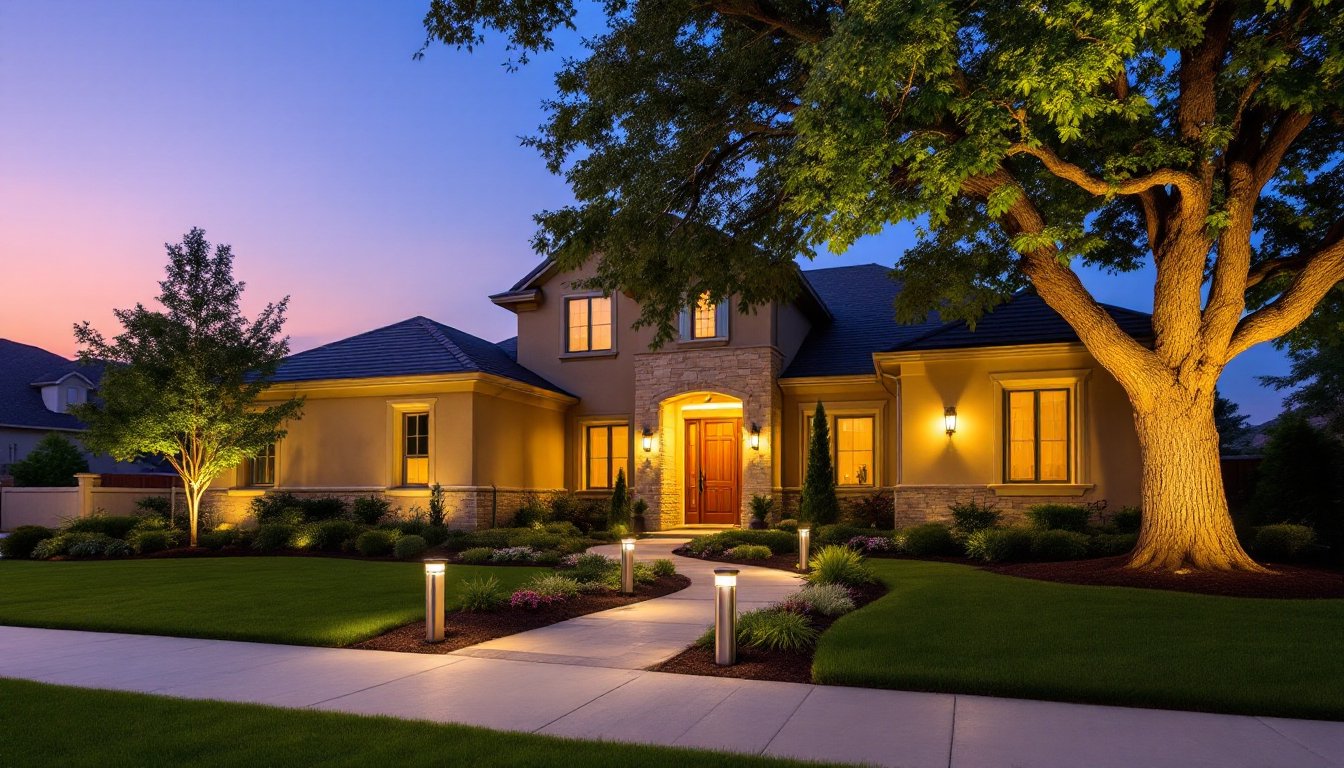
Most homeowners discover their landscape lighting is underwhelming only after the sun sets, dim paths, shadowy entryways, and fixtures that barely reach the tree line. If you’re planning outdoor lighting that can handle larger fixtures, illuminate tall features, or power multiple lights on a single circuit, 120 volt landscape lighting might be the answer. Unlike its low-voltage cousin, 120V outdoor lighting runs on standard household current, delivering more punch and reach without the voltage drop issues that plague long runs. This guide walks you through how it works, when it makes sense, and what you need to install it safely and effectively.
Table of Contents
ToggleKey Takeaways
- 120v landscape lighting operates on standard household voltage without a transformer, delivering brighter output and consistent brightness across long cable runs without voltage drop issues.
- Choose 120V outdoor lighting for tall features, large properties, high-wattage fixtures, or runs over 100 feet; low-voltage systems work better for small-scale accent lighting and DIY flexibility.
- 120v landscape lighting requires GFCI protection, direct-burial cable at 18–24 inches deep, weatherproof fixtures rated for wet locations, and often a permit and professional inspection.
- Installation demands proper materials including UF-B cable, PVC conduit, weatherproof junction boxes, and specialized tools like a trencher and fish tape for professional results.
- LED fixtures are the most efficient choice for 120V systems, offering 25,000+ hour lifespans, lower energy costs, and cleaner aesthetics than halogen alternatives.
- Plan your 120V landscape lighting layout carefully with a wiring diagram, test fixtures before backfilling, and consider hiring a licensed electrician for panel connections to ensure safety and code compliance.
What Is 120V Landscape Lighting and How Does It Work?
120V landscape lighting operates on the same standard household voltage that powers your indoor lights and outlets, no transformer required. Each fixture connects directly to a 120-volt circuit, typically run underground in UF-B (Underground Feeder) cable or through rigid or PVC conduit depending on local code.
Unlike low-voltage systems that step down to 12V via a transformer, 120v outdoor lighting delivers full line voltage to each fixture. This means brighter output, longer cable runs without voltage drop, and the ability to use standard bulb types including LED, halogen, and incandescent options. The trade-off? Higher stakes for installation, any wiring mistakes carry the full 120 volts, which can cause serious shock or fire hazards if done incorrectly.
Each fixture must use a weatherproof electrical box rated for wet locations, and all connections need to be protected with GFCI (Ground Fault Circuit Interrupter) protection per NEC code. The circuit typically originates from your main panel or a subpanel, running through buried cable to junction boxes or individual fixtures. Most setups include a timer, photocell, or smart switch for automated control.
120V vs. Low Voltage Landscape Lighting: Which Is Right for You?
The choice between 120 volt landscape lighting and low-voltage systems isn’t just about brightness, it’s about the scope and demands of your project.
120V systems excel when you need:
- Higher light output for tall trees, large columns, or wide facades
- Longer cable runs (over 100 feet) without voltage drop affecting brightness
- Fewer transformers and splices, one circuit can power multiple fixtures without stepping down voltage
- Commercial-grade durability for high-traffic or high-visibility areas
But, they require buried conduit or direct-burial cable, GFCI protection, and often a permit. Installation mistakes are less forgiving.
Low-voltage (12V) systems are better suited for:
- Path lights, uplights, and accent fixtures where subtle illumination is the goal
- DIY-friendly installation, lower shock risk, no permit in most jurisdictions
- Flexibility, easier to relocate fixtures or expand the system later
- Energy efficiency at small scale, transformers are efficient, and LED fixtures sip power
Voltage drop is the Achilles’ heel of low-voltage systems. After about 100 feet of cable, fixtures at the end of the run can dim noticeably unless you upsize wire gauge or add a second transformer. For comparison, experienced electricians often recommend planning low-voltage runs carefully to avoid brightness inconsistencies across the layout.
If you’re lighting a large property, powering high-wattage fixtures, or want uniform brightness across long distances, 120v outdoor lighting is the more reliable backbone.
Benefits of Choosing 120V for Your Outdoor Lighting
120 volt landscape lighting isn’t the default choice for most DIYers, but it delivers clear advantages when the project demands more power or permanence.
Consistent brightness across long runs. Because you’re working with full line voltage, a fixture 150 feet from the panel gets the same voltage as one 15 feet away, no dimming, no guesswork on wire gauge.
Higher wattage capacity. If you’re illuminating a 30-foot oak, a stone chimney, or a commercial sign, low-voltage LED spotlights might not cut it. 120V fixtures can handle higher-wattage bulbs (though LED is still the most efficient choice) and deliver the lumens needed for large-scale features.
Fewer components. No transformers, no daisy-chained hubs, no calculating load per leg. One circuit, one breaker, direct power to each fixture. This simplifies troubleshooting and reduces points of failure.
Professional-grade aesthetics. Many architectural and commercial-grade fixtures are designed for 120V. If you want cast brass bollards, recessed wall lights, or flush-mount deck lights with serious output, your options expand significantly at line voltage.
Future-proofing. Adding fixtures to a 120V circuit is straightforward, tap into a junction box, add a new weatherproof box, and wire in the fixture. No worrying about overloading a transformer or splitting loads.
The cost difference? Expect to spend more on conduit, junction boxes, and possibly permit fees. But for large properties or high-performance lighting, the upfront investment pays off in reliability and output.
Installation Essentials: What You Need to Know Before You Start
Installing 120 volt landscape lighting isn’t a weekend DIY project unless you’re comfortable working with live circuits and have a solid grasp of electrical code. In most jurisdictions, outdoor 120V wiring requires a permit and inspection. If that’s the case in your area, budget time and a few hundred dollars for the process.
Materials you’ll need:
- UF-B cable (typically 12/2 or 14/2 with ground) rated for direct burial, or THWN wire if running through conduit
- PVC conduit (Schedule 40 or 80) or rigid metal conduit, depending on local code and exposure
- Weatherproof junction boxes and covers rated for wet locations (look for a “WP” or “rainproof” rating)
- GFCI breaker or GFCI outlet at the circuit origin
- Outdoor-rated fixtures with appropriate gaskets and mounting hardware
- Wire nuts rated for outdoor use or waterproof splice kits
Tools:
- Trenching shovel or a powered trencher (a walk-behind trencher saves hours if you’re running 100+ feet)
- Fish tape for pulling wire through conduit
- Wire strippers, lineman’s pliers, voltage tester (non-contact and multimeter)
- PVC saw or hacksaw, conduit bender (if running rigid conduit with bends)
Typical installation steps:
- Plan your layout. Mark fixture locations, measure cable runs, and sketch a wiring diagram. Identify the nearest outdoor-rated outlet or plan a new circuit from your panel.
- Dig trenches. NEC requires direct-burial cable to be at least 18 inches deep (24 inches is safer if you have garden beds or future digging planned). Conduit can reduce burial depth to 12 inches in some cases, check local code.
- Run cable or conduit. If using conduit, assemble it in the trench, then pull wire through with fish tape. Leave extra slack at each fixture location for connections.
- Install junction boxes. Mount weatherproof boxes at each fixture point, securing them to a post, wall, or concrete pad. Bring cable into the box through a watertight conduit fitting or cable clamp.
- Make connections. Strip wire ends, connect fixture leads using twist-on wire connectors, and wrap with electrical tape or use heat-shrink tubing. Ground all metal fixtures and boxes.
- Test before burying. Turn on the circuit, check each fixture for proper operation, and use a multimeter to confirm voltage at each box.
- Backfill and finish. Once everything works, fill trenches, tamp soil, and restore sod or mulch.
Safety Requirements and Electrical Codes
GFCI protection is non-negotiable. All outdoor 120V circuits must be protected by a ground fault circuit interrupter, either at the breaker or the first outlet in the circuit. GFCIs trip in milliseconds if they detect current leakage, preventing shock.
Burial depth matters. Direct-burial cable (UF-B) typically requires 18–24 inches of cover. Conduit can reduce this to 12 inches (PVC) or 6 inches (rigid metal conduit under concrete). Local amendments to the NEC can vary, so confirm with your building department.
Wet location ratings. Every fixture, box, and cover must be rated for wet locations, not just “damp.” Look for the “WP” symbol or language stating “suitable for wet locations.”
Grounding. All metal boxes, conduit, and fixtures must be bonded to the equipment grounding conductor. Don’t skip the green or bare ground wire.
PPE: Wear rubber-soled boots, safety glasses, and gloves when working with live circuits. Always turn off power at the breaker and use a voltage tester before touching any wire.
If your jurisdiction requires a permit, the inspector will verify burial depth, GFCI protection, proper box ratings, and grounding. Budget time for a rough inspection before backfilling and a final inspection once fixtures are in place. Hiring a licensed electrician for the panel connection and rough-in can speed up permitting if you’re handling the trenching and fixture install yourself. Several project planning tools can help estimate labor and material costs for your region.
Best Types of 120V Landscape Lighting Fixtures for Different Applications
Choosing the right 120 volt landscape lighting fixtures depends on what you’re illuminating and how much output you need. Here’s a breakdown by application:
Path and Area Lights
For driveways, walkways, or large patios, look for bollard lights or post-mounted fixtures with 15–25 watts of LED output (equivalent to 60–100W incandescent). Cast aluminum or brass housings hold up better than plastic in freeze-thaw cycles. Mount them 15–20 feet apart for even coverage.
Uplights and Spotlights
For trees, columns, or architectural features, use adjustable spotlights with narrow beam angles (15–30 degrees). A 20–30W LED spot can light a two-story facade or a mature tree canopy. Ground stakes work for flexible placement: surface-mounted fixtures on hardscape offer more stability. Aim for 3000K–4000K color temperature for a neutral white that doesn’t wash out stone or wood tones.
Wall-Mounted and Sconce Fixtures
120V sconces and flush-mount fixtures work well for entryways, garage doors, and covered patios. Choose fixtures with downward-facing shields to reduce glare and light pollution. Die-cast aluminum with powder-coated finishes resists corrosion better than painted steel.
Recessed and In-Ground Lights
For deck lighting, stair risers, or driveway edges, recessed canisters rated for wet locations and vehicle loads (if applicable) are essential. Look for fixtures with replaceable LED modules, sealed units are cheaper upfront but become landfill when the LED fails. Install with a drainage path to prevent water pooling inside the housing.
Flood and Security Lights
For broad coverage of yards, driveways, or building perimeters, LED floodlights with motion sensors or photocell controls deliver 1500–3000 lumens from a single fixture. Mount at 8–12 feet height, angled downward to minimize glare and light trespass. According to testing by home improvement experts, LED floods can last 25,000+ hours, far outlasting halogen equivalents with a fraction of the energy draw.
Material and Finish Considerations
Brass and copper develop a natural patina but cost more upfront. Powder-coated aluminum offers durability at a lower price point. Avoid plastic housings for ground-mounted fixtures, they crack in cold climates and degrade under UV exposure. Stainless steel hardware resists rust better than zinc-plated screws.
Bulb Choice
LED is the default for efficiency and longevity, but some designers prefer the warmer glow of halogen for uplighting stone or brick. If you go halogen, expect to replace bulbs every 2,000–4,000 hours and factor in the higher energy cost. LED retrofits are available for many older 120V fixtures, letting you upgrade without replacing the housing.
Conclusion
120 volt landscape lighting is the workhorse choice when you need serious output, long runs, or commercial-grade reliability. It’s not the simplest install, but for homeowners willing to pull permits, dig trenches, and follow code, it delivers consistent brightness and fewer points of failure than low-voltage alternatives. Plan your layout carefully, don’t skip GFCI protection or burial depth requirements, and test everything before backfilling. Done right, a 120V system will light your property reliably for decades.