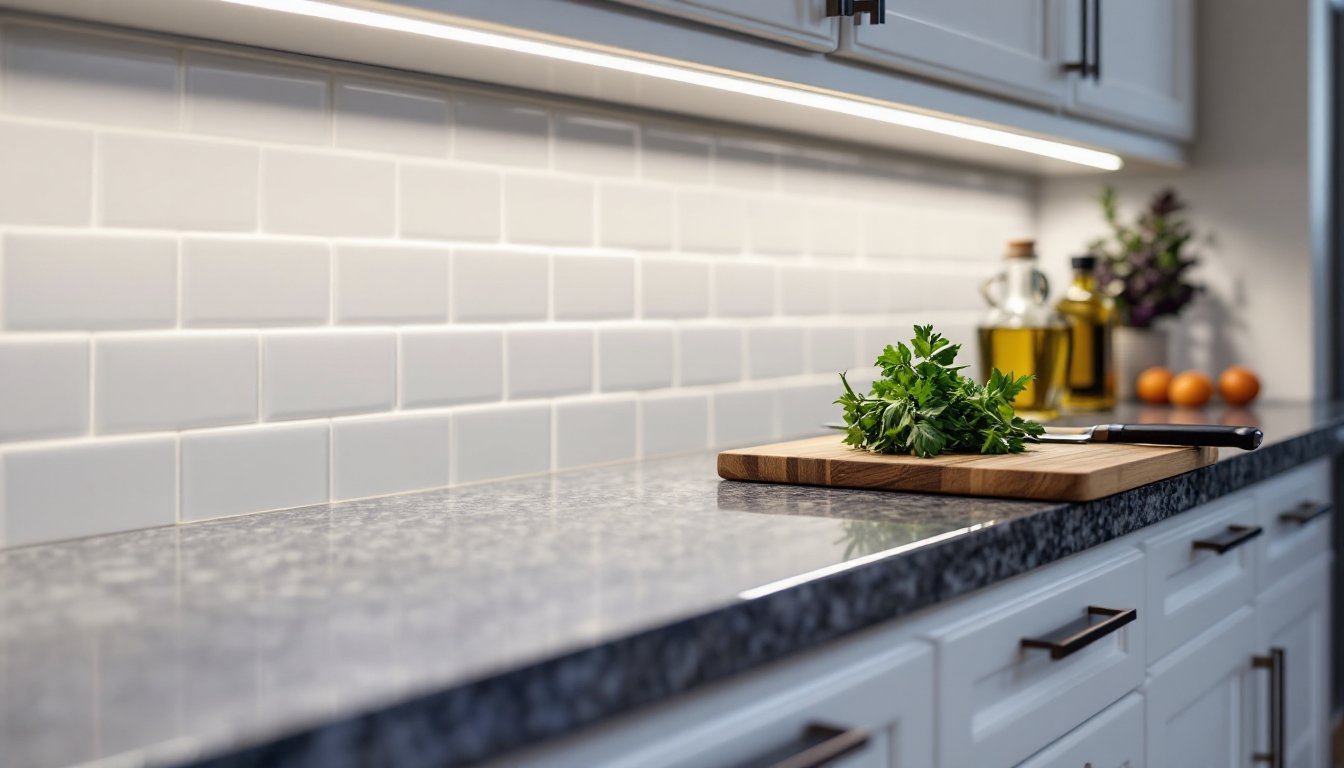
Under cabinet lighting used to mean visible hot spots, shadowy gaps, and LED strips that looked more industrial than inviting. COB (Chip-on-Board) technology has changed that equation entirely. This lighting approach packs multiple LED chips onto a single circuit board, creating a continuous ribbon of light without the dotted effect of traditional strips. For homeowners upgrading kitchen work surfaces or tackling a cabinet refresh, COB offers professional-grade illumination without the contractor price tag. It’s bright, even, and surprisingly straightforward to install, if you know what you’re working with.
Table of Contents
ToggleKey Takeaways
- COB under cabinet lighting uses Chip-on-Board technology to create seamless, continuous light without visible LED dots, unlike traditional SMD strips that show a beaded effect.
- COB strips cost 20–40% more per foot than basic LED options but deliver superior color consistency, heat dissipation, and professional-grade illumination for kitchens and countertops.
- Select the correct 12V or 24V driver matched to your strip’s wattage, plus 20% buffer; underpowered drivers overheat and fail prematurely.
- Choose 3500K–4000K color temperature for under-cabinet kitchen lighting to balance warm ambiance with task visibility without harsh shadows.
- Prep surfaces thoroughly with degreaser and alcohol before installation, use aluminum mounting channels for better heat management, and always cut only at manufacturer-marked intervals to avoid damaging circuits.
- Verify local electrical codes before hardwiring; use a licensed electrician for 120V connections, though low-voltage Class 2 systems like COB are DIY-friendly for homeowners comfortable with basic wiring.
What Is COB Under Cabinet Lighting?
COB stands for Chip-on-Board, a manufacturing method where multiple LED diodes are mounted directly onto a substrate to form a single module. Instead of seeing individual LED dots every few inches like older strip lights, COB creates a seamless, uniform band of light.
The technology works by clustering dozens of tiny LED chips in a dense array, then covering them with a phosphor coating. The result is a smooth glow with no visible point sources, think of it as the difference between string lights and a fluorescent tube. Under cabinets, this translates to even coverage across countertops with no dark spots between bulbs.
Most COB strips run on 12V or 24V DC power, requiring a transformer (driver) to step down household 120V AC current. They’re typically sold in reels ranging from 8 to 16 feet, rated by lumens per foot and wattage per foot. Common residential strips deliver 300–500 lumens per foot, enough to eliminate shadows on prep surfaces without glare.
Why Choose COB Over Traditional LED Strip Lights?
Traditional LED strips use discrete SMD (Surface-Mounted Device) LEDs spaced at intervals, often 5050 or 2835 chips. You can see each diode as a separate point of light, especially on glossy countertops or glass backsplashes. COB eliminates that spotted appearance.
Here’s how they compare:
- Light Quality: COB produces a continuous line with no visible dots. Traditional strips show distinct points, creating a “beaded” effect when reflected.
- Color Consistency: Because COB chips share a single phosphor coating, color temperature stays uniform across the entire strip. SMD strips can vary slightly from chip to chip.
- Heat Dissipation: COB’s consolidated design spreads heat more evenly, often extending lifespan. Many COB strips are rated for 50,000+ hours.
- Installation Flexibility: COB strips are often thinner and more pliable, making them easier to route through tight cabinet corners or shallow profiles.
The trade-off? COB strips generally cost 20–40% more per foot than basic SMD options. For task lighting where uniformity matters, countertops, under-cabinet displays, or vanity mirrors, that premium is worth it. For accent lighting in closets or toe kicks, standard LED strips work fine.
Another consideration: COB strips typically can’t be cut as frequently. SMD strips often allow cuts every 2 inches at marked points: COB cuts may be limited to every 4–6 inches. Check the manufacturer’s cut marks before ordering to avoid wasted material.
How to Choose the Right COB Under Cabinet Lighting
Selecting COB lighting involves more than picking the longest reel that fits your budget. Start by measuring the linear footage of cabinets you’re lighting. Add 10% for routing around corners and trimming to cut points.
Next, decide on dimming capability. Many COB strips are dimmable, but only when paired with a compatible LED driver and dimmer switch. Standard incandescent dimmers cause flickering or buzzing. Look for drivers labeled “0–10V dimmable” or “PWM dimmable,” and pair them with an ELV (electronic low-voltage) dimmer switch. If you’re keeping existing switches, verify compatibility before buying.
Power supply matters. Calculate total wattage by multiplying strip length (in feet) by watts per foot. Add a 20% buffer for driver longevity. A 12-foot run of 4W/ft COB strip needs a driver rated for at least 58W (12 × 4 × 1.2). Underpowered drivers overheat and fail early.
Adhesive backing is standard, but don’t rely on it alone for permanent installs. 3M VHB tape or aluminum mounting channels provide better hold, especially on textured or porous cabinet undersides. Channels also act as heat sinks, extending strip life.
Color Temperature and Brightness Considerations
Color temperature is measured in Kelvin (K). For kitchens, 2700K–3000K delivers a warm white similar to incandescent bulbs, cozy, but can make food prep harder. 4000K–5000K is neutral to cool white, mimicking daylight and improving visibility for chopping and reading recipes. Most designers split the difference at 3500K–4000K for under-cabinet tasks.
Avoid the temptation to go brighter than necessary. 400–500 lumens per foot is plenty for countertop work. Over 600 lumens starts to feel clinical and creates harsh shadows. If you want flexibility, install a dimmer, it’s easier to dial down brightness than to retrofit lower-output strips later.
Some COB strips offer tunable white (adjustable color temperature) or full RGB color. Unless you’re lighting a bar or entertainment space, stick with single-temperature white. Tunable systems add cost and complexity with minimal functional benefit in a kitchen.
Installing COB Under Cabinet Lighting: A Step-by-Step Guide
Before starting, check local electrical codes. Running new 120V circuits to power drivers typically requires a permit and licensed electrician. If you’re plugging into an existing outlet, most jurisdictions treat it as low-voltage work, legal for DIY but verify first.
Tools and Materials:
- COB LED strip (cut to length)
- LED driver/transformer (matched to strip wattage)
- Aluminum mounting channel (optional but recommended)
- Wire strippers, wire nuts, and electrical tape
- Drill with 3/8″ bit (if running wire through cabinets)
- Measuring tape and level
- Safety glasses and work gloves
Step-by-Step Installation:
-
Measure and Plan: Determine strip placement, typically 2–4 inches from the cabinet front edge for even coverage. Mark cut points on the strip using manufacturer guidelines (usually every 4–6 inches).
-
Prep the Surface: Clean cabinet undersides with isopropyl alcohol. Remove grease or dust, adhesive won’t stick to grime. Let dry completely.
-
Mount Channels (If Using): Cut aluminum channels to length with a hacksaw or miter saw. Secure them to cabinet undersides with screws or heavy-duty double-sided tape. Channels hide the strip, diffuse light, and simplify future removal.
-
Install the Strip: Peel backing and press the COB strip into the channel or directly onto the cabinet. Work slowly to avoid bubbles or misalignment. Don’t stretch the strip, it can damage internal connections.
-
Wire the Driver: Most COB strips use push connectors or soldered leads. Connect strip positive (+) to driver positive, negative (–) to negative. If spanning multiple cabinet sections, use parallel wiring, never daisy-chain strips end-to-end beyond the driver’s rated output.
-
Connect to Power: If hardwiring, route 120V supply from an existing circuit to the driver input. Use a junction box for connections, no exposed wire nuts. If using a plug-in driver, position it inside a cabinet near an outlet. Avoid placing drivers in confined spaces without ventilation.
-
Test Before Securing: Power on and check for even brightness, flickering, or dead sections. Fix issues before finalizing the install.
-
Secure and Conceal: Tuck excess wiring into cabinets. Use cable staples or zip ties to route wires neatly. If the driver has a fan, orient it for airflow.
Safety note: Always work with power OFF at the breaker when wiring drivers to household circuits. Use a non-contact voltage tester to confirm power is dead before touching wires. If you’re uncomfortable with electrical work, hire a licensed electrician, Class 2 low-voltage systems are safer than mains voltage, but drivers themselves connect to 120V AC.
Common Mistakes to Avoid When Installing COB Lighting
Skipping Surface Prep: Adhesive fails on dusty or oily surfaces. Wipe down cabinets with degreaser, then alcohol. Let dry 15 minutes before applying strips.
Using the Wrong Driver: Matching wattage isn’t enough. Voltage must match (12V strip needs a 12V driver), and the driver must support dimming if you want that feature. Mixing incompatible components causes flickering, overheating, or early failure.
Ignoring Heat Buildup: COB strips generate less heat than incandescent bulbs, but they still need airflow. Don’t sandwich strips between cabinet and wall with no gap. If using channels, choose aluminum over plastic, it conducts heat away from the LEDs.
Cutting at the Wrong Spot: Only cut at marked intervals (usually indicated by scissor icons and copper solder pads). Cutting elsewhere severs circuits, leaving dead sections. Measure twice, cut once.
Overloading a Single Driver: If lighting a long kitchen, you might need multiple drivers. A 60W driver can’t safely power 80W of strips. Split the run across two drivers or upgrade to a higher-capacity unit.
Forgetting Wire Management: Loose wires snag on stored items and look unprofessional. Use adhesive-backed cable clips or run wires through drilled holes between cabinet boxes. For track light heads or other accent fixtures, similar attention to wiring pays off.
Neglecting Code Compliance: Even low-voltage installs may require inspection if they’re part of a larger remodel. Check with your local building department. In some jurisdictions, any work involving permanent wiring to a panel requires a permit.
Many homeowners also reference home maintenance guides for related cabinet or electrical projects. Research from smart home product reviews shows that proper planning during installation reduces callbacks and failures. Kitchen-focused advice from design ideas often emphasizes lighting as a key upgrade in remodels.
Conclusion
COB under cabinet lighting delivers restaurant-quality illumination with DIY-friendly installation. The key is matching components, strip, driver, and dimmer, and taking time with surface prep and wire routing. Get those details right, and you’ll have shadow-free countertops and a cleaner, more modern kitchen without the electrician’s bill.