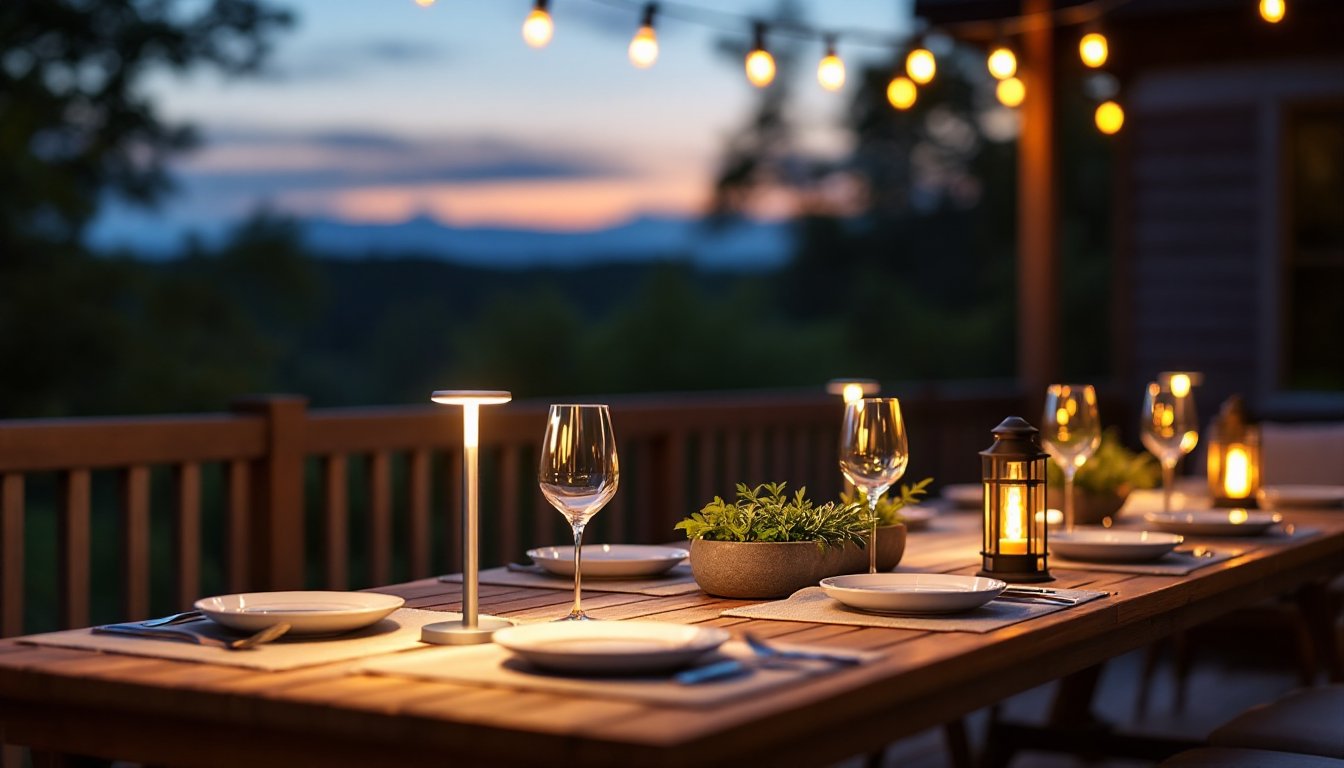
Outdoor entertaining doesn’t end when the sun goes down, not if you’ve got the right lighting. Tabletop lights bring warmth, visibility, and atmosphere to any patio or deck without hardwiring or installing permanent fixtures. They’re portable, flexible, and surprisingly powerful at turning a basic picnic table into a proper outdoor dining space. Whether you’re hosting summer dinners or just want a better-lit spot for late-night grilling, outdoor tabletop lighting gives you control over the mood without calling an electrician or pulling permits.
Table of Contents
ToggleKey Takeaways
- Outdoor tabletop lighting eliminates shadows over your dining surface and extends patio usability well past sunset without requiring permanent installation or electrical permits.
- Battery-powered LED lamps with lithium-ion rechargeable batteries offer 6-20+ hour run times, while solar options work best as supplemental accent lighting due to shorter charge cycles and lower brightness levels.
- Choose fixtures with IP54 or higher weather ratings for covered patios and IP65+ for exposed decks to ensure durability against rain, salt air, and UV exposure.
- Warm white lighting (2700K-3000K) creates an inviting dining atmosphere, while cool white (4000K-5000K) is better for task-focused outdoor work—prioritize dimmable options for flexibility.
- Layer tabletop lights with overhead fixtures and accent lighting to create visual depth, and use clustered or off-center placement on larger tables to improve illumination and balance your design.
- Prioritize portable, stable designs with low centers of gravity, weather-resistant materials like aluminum or stainless steel, and maintenance routines you’ll actually follow.
Why Outdoor Tabletop Lighting Matters for Your Outdoor Space
Good outdoor lighting does more than prevent you from knocking over drinks in the dark. It extends the usability of your deck, patio, or porch well past sunset, which in practical terms means you get more value out of the square footage you already have.
Tabletop lights solve a specific problem: overhead string lights and wall-mounted fixtures cast shadows across the table, making it hard to see food, read a menu, or play cards. A light source on the table fills in those shadows and creates a focused pool of illumination right where you need it.
From a design standpoint, tabletop lighting adds layers. Overhead lights alone can feel flat and utilitarian. Adding a lower light source, whether it’s a lantern, LED lamp, or candle-style fixture, creates depth and visual interest. It also gives you flexibility: move the light closer for task lighting during prep work, then dial it down or reposition it once guests arrive.
Safety’s another factor. Well-lit pathways and steps are standard advice, but people forget about the table itself. Uneven surfaces, hot dishes, and sharp utensils are easier to navigate when you’re not squinting. A stable, weather-resistant tabletop light reduces trip hazards and keeps your setup functional in low-light conditions.
Types of Outdoor Tabletop Lighting to Elevate Your Dining Experience
Not all tabletop lights are created equal. Power source, brightness, and durability vary widely, and what works for a covered porch might fail on an exposed deck. Here’s what’s actually on the market and how each type performs.
Battery-Powered and Rechargeable Options
Battery-powered LED lamps are the workhorses of outdoor tabletop lighting. Look for models with lithium-ion rechargeable batteries, they hold a charge longer and tolerate temperature swings better than disposable alkaline cells. Run times vary from 6 to 20+ hours depending on brightness settings, so check specs if you’re planning all-night events.
Most rechargeable tabletop lights use USB-C charging, which is convenient if you’ve already got charging cables for phones and tools. Some higher-end models include a charging base, similar to what you’d see with cordless power tools.
Brightness is measured in lumens. For ambient dining, 50-150 lumens is plenty. Task lighting (reading, food prep) benefits from 200-400 lumens. Many models offer three-way dimming or touch controls so you can adjust on the fly.
Weather resistance is non-negotiable. Look for an IP rating of IP54 or higher, that means the fixture is protected against dust and splashing water. If your table is fully exposed to rain, go for IP65 or IP67. Don’t assume all “outdoor” lights are waterproof: some are only splash-resistant and will fail if left out in a downpour.
One underrated feature: portability. A lightweight lamp with a handle or hook makes it easy to move from table to grill to poolside. Some designs include a built-in Bluetooth speaker, which is a nice bonus if you’re already carrying a light around.
Solar-Powered Tabletop Lights
Solar tabletop lights are appealing because there’s no charging routine, just leave them in the sun and they light up at dusk. But they come with trade-offs.
Most solar models use small monocrystalline or polycrystalline panels that need 6-8 hours of direct sunlight to fully charge. If your patio is shaded or you live in a region with long winters, performance drops significantly. Cloudy days mean dim lights or no lights at all.
Battery capacity in solar fixtures tends to be smaller than dedicated rechargeable lamps, so run times are shorter, typically 4-8 hours. Brightness is also lower on average, hovering around 20-100 lumens. That’s fine for accent lighting but may not cut it for functional dining.
Durability is hit-or-miss. Cheaper solar lights use thin plastic housings that crack in freezing temps or warp in high heat. Better models feature powder-coated aluminum or tempered glass and can handle UV exposure without fading.
Solar lights work best as supplemental lighting or for decorative purposes, think pathway markers, centerpiece accents, or low-light mood setters rather than primary task lighting. Pairing them with adjustable lighting options can help balance both function and aesthetics across your outdoor space.
How to Choose the Right Outdoor Tabletop Lighting for Your Needs
Choosing a tabletop light isn’t complicated, but it helps to match the fixture to the actual conditions and use case. Start with your table material and layout.
Table size matters. A small bistro table (24-30 inches diameter) needs only one compact light. A standard patio dining table (60-72 inches) benefits from two fixtures spaced evenly, or one larger lamp with a wider light spread. Measure your table before shopping so you don’t end up with a light that’s too tall, too dim, or visually out of proportion.
Material compatibility is another consideration. Glass or metal tables handle heat better than wood or composite. If you’re using a candle-style lamp with a real flame (more on that below), place it on a heat-resistant base or trivet to prevent scorching or discoloration.
Climate and exposure dictate durability requirements. Covered patios can get away with IP44-rated fixtures. Tables on open decks, especially in coastal or high-humidity areas, need IP65 or better. Salt air, UV exposure, and freeze-thaw cycles all degrade materials over time. Aluminum, stainless steel, and UV-stabilized resin hold up better than painted steel or basic plastic.
Brightness and color temperature affect both function and mood. Warm white (2700K-3000K) mimics candlelight and feels inviting. Cool white (4000K-5000K) is closer to daylight and better for task work but can feel clinical at the dinner table. If you want versatility, choose a light with adjustable color temperature.
Consider how you’ll use the space. Hosting dinners? Prioritize dimmable, warm-toned lights with long battery life. Using the table for hobbies, grilling prep, or outdoor work? Go brighter and consider a model with a more focused beam.
Safety features matter more than most people think. Look for lights with a stable, low center of gravity to resist tipping in wind. Avoid top-heavy designs, especially on tables with uneven surfaces. If kids or pets are around, skip any fixture with exposed bulbs, hot metal housings, or fragile glass components.
Finally, think about maintenance. Rechargeable models require periodic charging: solar lights need panel cleaning. Candle lanterns need wick trimming and fuel refills. Choose a system that fits your routine. If you’re not going to remember to charge a battery, solar might be better, or vice versa.
Creative Placement Ideas and Styling Tips for Maximum Impact
Placement isn’t just about visibility, it’s about creating zones and layers that make the space feel intentional. A single light plunked in the center of the table works, but it’s not the only option.
Clustered arrangements add visual interest. Try grouping two or three smaller lights at varying heights using risers, books, or overturned planters. This works especially well on long rectangular tables where a single fixture can leave the ends feeling dim.
Off-center placement can balance other elements. If you’ve got a large centerpiece, tray, or serving dish on one side, position the light opposite to keep the table from feeling lopsided. This also leaves room for food and dishware in the middle.
Layering light sources creates depth. Combine tabletop lights with overhead string lights, wall sconces, or landscape lighting. Each layer serves a different purpose: overhead for general illumination, tabletop for focused tasks, and ground-level accent lights for ambiance. Many outdoor dining setups benefit from this layered approach to achieve a warm, inviting glow.
Use trays and bases to anchor your lights. A shallow tray with a few candles, a small lantern, and some greenery gives you a movable lighting “station” that can shift based on what’s happening at the table. It also protects surfaces and makes cleanup easier.
Match materials to your existing decor. Metal lanterns pair well with industrial or farmhouse styles. Woven rattan or bamboo shades suit coastal and bohemian themes. Glass hurricanes and brass fixtures work in traditional settings. Don’t overthink it, but aim for consistency, mixing too many finishes creates visual clutter.
Consider functional zones. If part of your table doubles as a bar or buffet, add extra task lighting there. If you’ve got a built-in fire pit or grill nearby, keep tabletop lights lower and further from the flame to avoid competing light sources.
Portable lighting extends use beyond the table. A lantern-style lamp with a handle can move to the grill, the deck railing, or even indoors if the weather turns. This flexibility is one of the biggest advantages of tabletop lighting compared to hardwired fixtures.
Finally, don’t ignore cord management if you’re using plug-in models. Even outdoor-rated extension cords can be trip hazards. Use cable clips, adhesive hooks, or low-profile cord covers to keep lines tidy and out of walkways. For spaces with more complex lighting layouts, planning wire runs ahead of time saves frustration later.
Conclusion
Outdoor tabletop lighting is one of the simplest upgrades you can make to a patio or deck. It’s portable, low-commitment, and immediately improves both function and atmosphere. Focus on durability, brightness, and how the light fits your actual routine, not just how it looks in a catalog. Get the basics right, and you’ll have a setup that works as well for a Tuesday night burger as it does for a full dinner party.