Swapping out builder-grade light bars for vintage fixtures can dramatically change the character of a bathroom, and it’s one of the more straightforward electrical upgrades a DIYer can tackle. Vintage bathroom lighting brings warmth, personality, and a sense of craftsmanship that modern mass-produced fixtures often lack. Whether you’re restoring a period home or just want to add visual interest to a bland powder room, vintage lighting offers styles ranging from ornate Victorian sconces to streamlined mid-century ceiling mounts. This guide covers style selection, sourcing authentic pieces, and installation considerations to help you integrate vintage lighting safely and effectively.
Table of Contents
ToggleKey Takeaways
- Vintage bathroom lighting fixtures offer superior quality and authentic character—often at a fraction of the cost of high-end reproductions, with restoration projects costing $40–$80 versus $200–$400 for modern replicas.
- Popular vintage styles include Art Deco (geometric, chrome finishes), Mid-Century Modern (clean lines, brass), Victorian (ornate, etched glass), and Industrial (gooseneck arms, enamel shades), each suiting different bathroom aesthetics.
- Vintage lighting must meet moisture-rating requirements for damp locations within 3 feet of tubs or showers per the National Electrical Code; rewiring with 18-gauge stranded wire and moisture-resistant insulation is typically necessary.
- Source authentic vintage bathroom lighting from architectural salvage yards (most reliable), estate sales, online marketplaces, and antique stores, with prices ranging from $30–$300 depending on condition and complexity.
- Before installation, verify mounting hardware compatibility, replace corroded sockets, ground the fixture properly, use LED bulbs to reduce heat in enclosed shades, and confirm local permit requirements with your building department.
Why Choose Vintage Lighting for Your Bathroom?
Vintage fixtures offer quality and design details you won’t find in most big-box stores. Many were manufactured with heavier-gauge metals, hand-blown glass shades, and finishes that have stood up to decades of use. They add character to bathrooms that might otherwise feel sterile or cookie-cutter.
From a practical standpoint, vintage lighting can often be restored and rewired for less than the cost of high-end reproduction fixtures. A tarnished brass sconce that needs new sockets and wiring might run $40–$80 in parts and a weekend of work, versus $200–$400 for a new “vintage-style” replica.
Vintage pieces also allow you to match or complement the existing architectural details in older homes. If you’ve got original tile, clawfoot tubs, or picture rail molding, a genuine 1920s fixture will tie the room together in a way that modern interpretations can’t quite replicate.
That said, not all vintage fixtures are bathroom-appropriate out of the box. You’ll need to verify or upgrade to damp-rated or wet-rated components if the fixture will be near a shower or tub. The National Electrical Code (NEC) requires certain zones around water sources to use fixtures rated for moisture exposure, this isn’t optional.
Popular Vintage Bathroom Lighting Styles
Art Deco and Mid-Century Modern
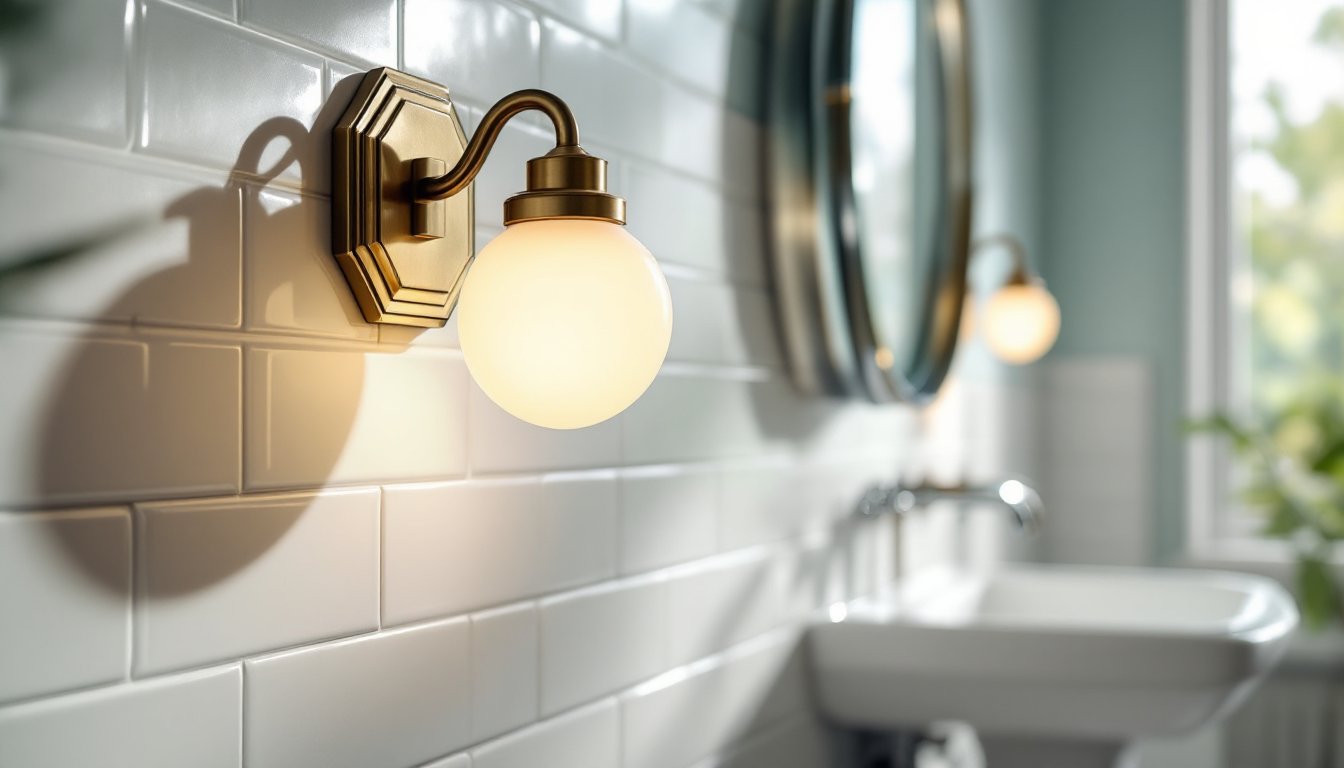
Art Deco fixtures from the 1920s and 1930s feature geometric shapes, chrome or nickel finishes, frosted glass shades, and streamlined silhouettes. Look for sconces with stepped or sunburst motifs, and ceiling fixtures with angular milk glass globes. These work especially well in black-and-white tile bathrooms or spaces with hexagonal floor patterns.
Mid-century modern lighting from the 1950s and 1960s leans toward clean lines, brass or brushed aluminum, and globe or cone-shaped shades. Sputnik-style fixtures are more common in living spaces, but simpler mid-century sconces and vanity bars fit beautifully over pedestal sinks or floating vanities. Many designs featured in home decor sourcebooks showcase how these styles integrate into contemporary renovations.
Both styles tend to use standard medium-base (E26) sockets, making bulb replacement straightforward. You can use LED bulbs to reduce heat output and energy use, important in a small, often poorly ventilated bathroom.
Victorian and Industrial Designs
Victorian fixtures range from ornate oil-lamp conversions with etched glass chimneys to simpler porcelain and brass wall sconces. Authentic Victorian pieces may have been converted from gas to electric in the early 1900s, so expect to find older cloth-covered wiring that needs replacement. The aesthetic pairs well with pedestal sinks, wainscoting, and vintage-style faucets.
Industrial fixtures, originally used in factories, workshops, and commercial settings, are popular in farmhouse and loft-style bathrooms. Gooseneck arms, enamel shades, and exposed bulb cages give a utilitarian edge. Many were built to withstand harsh environments, so the metal components are often in excellent shape even after decades of use.
Industrial pieces frequently use porcelain keyless sockets or pull-chain switches. These are easy to replace and widely available at hardware stores. If you’re installing an industrial fixture above a sink, verify that the shade is deep enough to prevent glare and that any exposed bulbs are shielded to meet local code.
Where to Find Authentic Vintage Fixtures
Architectural salvage yards are the most reliable source for genuine period fixtures. Staff can often tell you the approximate age, original location, and whether key components are intact. Expect to pay $30–$150 for sconces and $75–$300 for multi-light vanity bars or ceiling fixtures, depending on condition and rarity.
Estate sales and auctions can yield bargains, but you’ll need to inspect carefully. Bring a small flashlight to check for cracks in glass shades, corrosion inside sockets, and the condition of any original wiring. If the fixture still has cloth-covered wire or crumbling insulation, plan to have it rewired.
Online marketplaces (eBay, Etsy, Facebook Marketplace, Craigslist) offer convenience but limited ability to assess condition. Ask sellers for close-up photos of sockets, mounting hardware, and any maker’s marks. Shipping costs for heavy or fragile fixtures can add $20–$50 to the total.
Antique stores and flea markets are hit-or-miss. Prices can be inflated, especially in trendy neighborhoods, but you might find overlooked pieces in less-picked-over stalls. Early-morning weekend visits give you first access to new inventory.
If you’re restoring a specific period home and need matched sets, consider contacting regional salvage networks or posting requests in vintage restoration forums. Renovation advice communities often connect buyers and sellers of period-appropriate materials. Patience pays off, waiting a few months for the right fixture is better than settling for a mismatch.
Installation Tips for Vintage Bathroom Lights
Always turn off power at the breaker before working on any electrical fixture. Use a non-contact voltage tester to confirm the circuit is dead, don’t rely on the switch alone.
Rewiring is usually necessary. Most vintage fixtures have outdated or damaged wiring. Replace it with 18-gauge stranded wire rated for at least 150°C. If the fixture will be in a damp location (within 3 feet of a tub or shower), use wire with moisture-resistant insulation.
Check the mounting hardware. Older fixtures may have non-standard backplates or unusual screw patterns that don’t align with modern junction boxes. You can often drill new mounting holes in the fixture’s canopy or use a universal crossbar adapter. Confirm that your junction box is securely fastened to a stud or blocking, vintage metal fixtures are heavier than plastic modern equivalents.
Upgrade sockets if needed. Cracked porcelain or corroded brass sockets should be replaced. Keyless porcelain sockets cost around $3–$5 each: brass pull-chain sockets run $8–$12. Make sure replacements are rated for the wattage you plan to use. Many vintage fixtures were designed for 40W or 60W incandescent bulbs: if you’re using LEDs, wattage is less of a concern, but check that the socket fits your bulb base.
Ground the fixture properly. Older homes may have two-wire systems without a ground. If your junction box has a ground wire (bare copper or green), connect it to the fixture’s ground screw or wire. If there’s no ground available and the fixture is metal, consult a licensed electrician, code may require upgrading the circuit or installing a GFCI breaker.
Use appropriate bulbs. Enclosed vintage shades can trap heat. If the fixture lacks ventilation holes, use LED bulbs to minimize heat buildup. For exposed-bulb fixtures, consider vintage-style LED filament bulbs, they deliver the look of Edison bulbs without the fire hazard and energy waste.
Test before final assembly. Once wired, restore power and test the fixture before mounting shades or decorative components. This saves time if you need to troubleshoot a loose connection.
Apply finish touchups carefully. If you’re polishing brass or refinishing metal, do it before installation. Use non-abrasive cleaners appropriate for the original finish, harsh chemicals can strip vintage patinas that add character. For glass shades, mild dish soap and water work well: avoid ammonia-based cleaners on antique glass.
Know when to call a pro. If your bathroom remodel involves moving junction boxes, adding new circuits, or working in a space subject to strict wet-location code requirements, hire a licensed electrician. Permit requirements vary by jurisdiction, but many locales require permits for any new electrical work, including fixture replacement on existing circuits. Check with your local building department before starting.
Conclusion
Vintage bathroom lighting fixtures deliver aesthetic impact and quality craftsmanship that modern reproductions often miss. With careful sourcing, proper rewiring, and attention to moisture ratings and code requirements, most DIYers can successfully install authentic period lighting. The result is a bathroom with genuine character and a story behind every switch.