Line voltage landscape lighting runs on standard 120-volt household current, the same electricity powering your indoor fixtures. It’s a less common but powerful option for outdoor illumination, especially when high-intensity light or long cable runs are part of the equation. While low-voltage systems dominate residential landscapes, line voltage offers distinct advantages in specific scenarios. Understanding when to choose 120V over 12V can save headaches, money, and mid-project rewiring. This guide walks through what line voltage landscape lighting is, how it stacks up against low-voltage alternatives, and where it makes the most sense for outdoor projects.
Table of Contents
ToggleKey Takeaways
- Line voltage landscape lighting operates on standard 120V household current without requiring a transformer, delivering significantly higher light output (1,200+ lumens) compared to low-voltage systems for illuminating large properties, security zones, and architectural features.
- Line voltage systems excel for installations over 150 feet from the power source, maintaining consistent brightness without the voltage drop and dimming issues that affect 12V systems over extended cable runs.
- All line voltage landscape lighting installations require GFCI protection, electrical permits, NEC compliance, and proper underground conduit burial at code-required depths (typically 18-24 inches), making professional installation safer and more legally sound than DIY for most homeowners.
- Line voltage offers access to commercial-grade fixtures with superior durability, optics, and smart control integration, making it ideal for high-intensity security lighting, façade uplighting, and mixed-load outdoor circuits already powered by 120V.
What Is Line Voltage Landscape Lighting?
Line voltage landscape lighting operates on 120 volts AC, the standard electrical voltage in North American homes. Unlike low-voltage systems that step down power through a transformer, line voltage fixtures connect directly to your home’s electrical circuit or outdoor outlets.
These systems use the same wiring methods as indoor lighting: 14- or 12-gauge copper wire (depending on circuit load and run length) housed in conduit for underground installation. Fixtures designed for line voltage typically include weather-resistant housings rated for wet locations, with components built to handle full household current.
Line voltage fixtures are commonly found in commercial settings, parking lots, building facades, and large public spaces, but residential applications exist where brightness, fixture variety, or installation logistics favor 120V over 12V systems. The key difference is voltage: where low-voltage systems need a transformer to drop from 120V to 12V, line voltage systems eliminate that middleman entirely.
Line Voltage vs. Low Voltage Landscape Lighting: Key Differences
The split between line voltage and low voltage comes down to power delivery, installation complexity, and fixture performance.
Voltage and Wiring: Low-voltage systems run on 12V or 24V, requiring a step-down transformer. Wiring is simpler, often direct-burial cable without conduit in many jurisdictions. Line voltage uses full 120V AC, demanding NEC-compliant wiring methods: underground-rated cable (UF-B) or THWN conductors inside PVC conduit buried at code-required depths (typically 18 inches for rigid conduit, 24 inches for direct burial cable in residential zones, though local codes vary).
Brightness and Fixture Options: Line voltage fixtures deliver higher lumen output per watt at the socket. A 120V PAR38 floodlight easily hits 1,200+ lumens, while a comparable 12V fixture maxes out around 300-400 lumens without significant voltage drop over distance. Commercial-grade fixtures, wall packs, bollards, and high-output floods, are predominantly line voltage.
Safety and Shock Risk: Low voltage is inherently safer. A 12V shock is negligible: 120V can be lethal. Line voltage installations require GFCI protection and greater attention to weatherproofing and code compliance.
Installation Complexity: Low-voltage systems are more DIY-friendly. Line voltage work often requires permits and, in many areas, a licensed electrician to ensure NEC compliance.
Advantages of Line Voltage Landscape Lighting
Line voltage systems shine, literally, in scenarios where power and performance trump simplicity.
Higher Light Output: When illuminating tall trees, large facades, or security zones, line voltage delivers the lumens. A single 120V flood can replace three or four low-voltage fixtures, reducing fixture count and install labor.
No Transformer Required: Eliminating the transformer cuts one potential failure point and avoids the voltage drop issues that plague long low-voltage runs. In setups exceeding 100 feet from the power source, line voltage maintains consistent brightness without the dimming effect common in 12V systems.
Broader Fixture Selection: Line voltage opens access to commercial-grade products with longer lifespans, better optics, and more robust construction. Brands targeting professional installers prioritize 120V product lines, especially in categories like architectural wall wash fixtures, bollards, and high-CRI (Color Rendering Index) accent lights.
Future-Proofing for Smart Controls: Many advanced lighting control systems integrate more seamlessly with line voltage circuits, offering dimming, scheduling, and zoning without the quirks of low-voltage dimmer compatibility.
Better for Mixed Outdoor Circuits: If you’re already running 120V for outdoor outlets, pumps, or other equipment, adding lighting to the same circuit (load permitting) simplifies design and reduces material costs.
Disadvantages and Safety Considerations
Line voltage isn’t the default for residential landscapes for good reasons.
Electrical Shock Hazard: 120V is dangerous. Any underground splice, loose connection, or damaged insulation becomes a serious safety risk. All line voltage outdoor circuits must include GFCI protection, typically at the breaker or first outlet in the circuit. Wet conditions amplify risk, always use fixtures and junction boxes rated for wet locations (not just damp).
Code Compliance and Permits: Most jurisdictions require electrical permits for new 120V circuits and mandate inspections. DIYers comfortable with low-voltage work may not be legally allowed to install line voltage systems without a licensed electrician. Violating code can void insurance and create liability.
Installation Complexity and Cost: Burying conduit to code depth, running properly sized conductors, installing weatherproof boxes, and ensuring proper grounding adds time and expense. Conduit alone runs $0.40–$1.00 per linear foot, plus fittings, junction boxes, and burial labor. Low-voltage cable is cheaper and faster to install.
Limited DIY Appeal: The combination of permit requirements, shock risk, and technical complexity makes line voltage a poor choice for casual weekend projects. Homeowners without electrical experience should hire a pro.
PPE and Safety Practices: Always wear insulated gloves and use voltage testers before handling any circuit. Turn off power at the breaker, not just the switch, and lock out the panel during installation. Underground work near existing utilities requires calling 811 for locates before digging.
Best Applications for Line Voltage Outdoor Lighting
Line voltage makes sense in specific scenarios where low-voltage systems underperform.
Large Properties and Long Runs: When fixtures sit 150+ feet from the power source, maintaining voltage becomes a challenge with 12V systems. Line voltage delivers consistent brightness across extended distances without needing multiple transformers or upsized cable.
High-Intensity Security and Flood Lighting: Motion-activated floods, dusk-to-dawn wall packs, and perimeter security lights benefit from line voltage’s higher output. If the goal is visibility and deterrence rather than ambiance, 120V is the practical choice.
Commercial-Style Hardscape and Architectural Lighting: Bollards lining a long driveway, façade uplighting on a two-story home, or in-ground well lights for mature trees often require the punch only line voltage provides. Reviewers on platforms like Bob Vila’s landscape lighting roundup frequently note line voltage’s edge in these applications.
Integration with Existing Outdoor Circuits: If you’re adding lighting to an area already served by 120V (near a pool, workshop, or detached garage), tapping into an existing circuit (if capacity allows) is simpler than running a new low-voltage system.
Outdoor Living Spaces with Mixed Loads: Patios or kitchens with outlets, fans, heaters, and lighting often share a 120V circuit. Using line voltage fixtures avoids the clutter of a separate transformer and cable system.
Installation Requirements and DIY Considerations
Before breaking ground, understand what line voltage installation entails.
Permit and Code Research: Check local building codes and pull permits before starting. Most areas require inspection for new 120V circuits. The NEC (National Electrical Code) sets baseline standards, but local amendments vary. Burial depth, conduit type, and GFCI requirements differ by jurisdiction.
Circuit Planning and Load Calculation: Line voltage fixtures draw more current than low-voltage equivalents. A 100W floodlight pulls roughly 0.83 amps at 120V. Add up fixture wattage, divide by 120, and ensure the total stays well below the circuit’s breaker rating (typically 15A or 20A for lighting circuits). Leave 20% capacity margin.
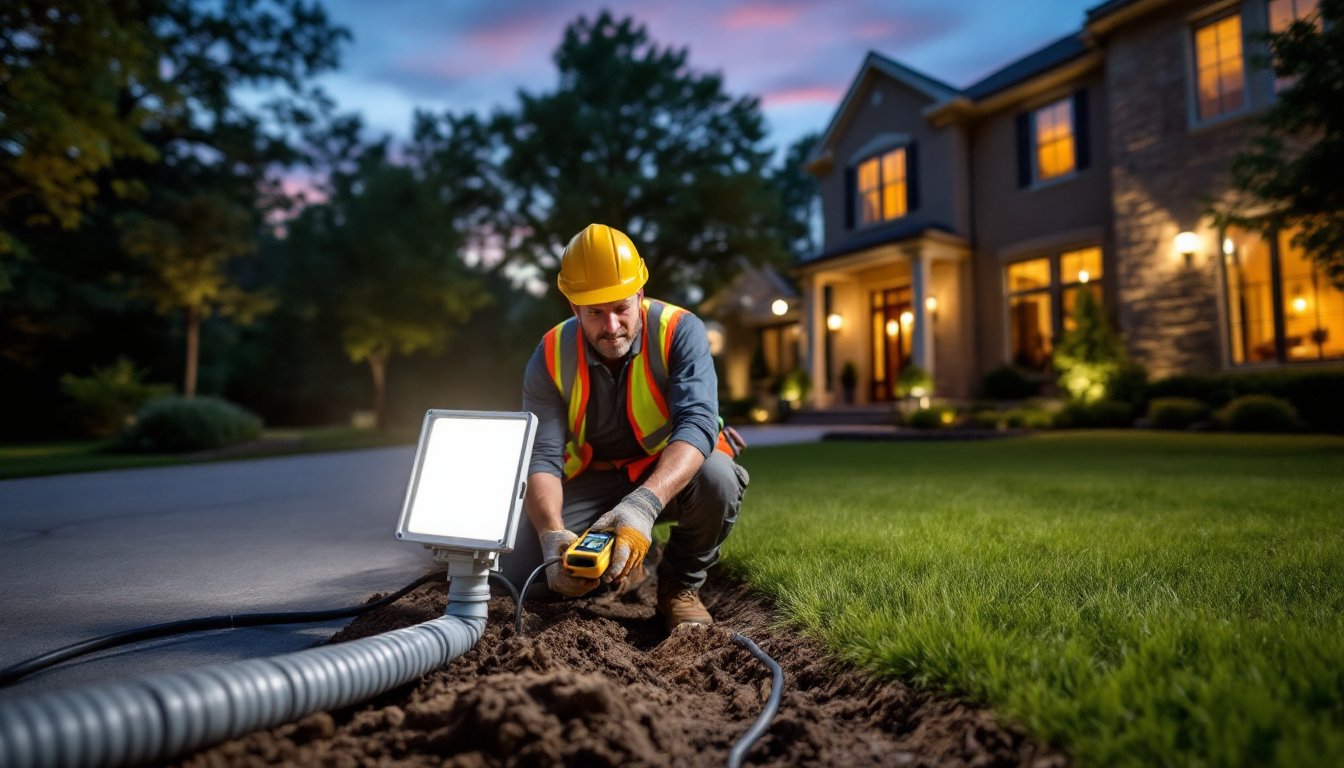
Wiring Methods: Use UF-B (Underground Feeder) cable for direct burial or THWN conductors in PVC conduit. Conduit protects against accidental shovel strikes and future cable damage. Bury conduit at code depth, typically 18 inches minimum for rigid conduit, 24 inches for direct burial cable under residential areas. Installation guides like Family Handyman’s landscape lighting walkthrough cover trench prep and conduit routing in detail.
Tools and Materials:
- Trenching spade or narrow trenching shovel
- PVC conduit cutter or hacksaw
- Wire strippers and lineman’s pliers
- Voltage tester (non-contact and multimeter)
- Waterproof wire connectors (not standard wire nuts)
- GFCI breaker or outlet
- Outdoor-rated junction boxes (NEMA 3R minimum)
DIY vs. Professional: If you’re comfortable running new circuits, understand load calculations, and can navigate permit inspections, line voltage installation is within reach for experienced DIYers. If you’ve never worked with household voltage, hire a licensed electrician. Mistakes aren’t just cosmetic, they’re dangerous.
Fixture Selection: Choose fixtures rated for wet locations (not just damp). Look for corrosion-resistant housings (die-cast aluminum, powder-coated steel, or composite) and sealed gaskets. LED fixtures reduce load and heat, making them ideal for line voltage where efficiency matters.
Testing and Safety Checks: After installation, test each fixture with power on, verify GFCI trips properly, and inspect all connections for moisture intrusion. Use a voltage tester to confirm circuits are de-energized before any maintenance.
Conclusion
Line voltage landscape lighting isn’t the easiest path, but it’s the right one when brightness, distance, or fixture choice demand it. The trade-offs, permits, conduit, and safety complexity, are real, but so are the benefits: consistent power over long runs, commercial-grade durability, and higher output where it counts. For large properties, security applications, or architectural accents, 120V delivers results low-voltage systems can’t match. Just respect the voltage, follow code, and don’t hesitate to call in a pro when the project outgrows your skill set.