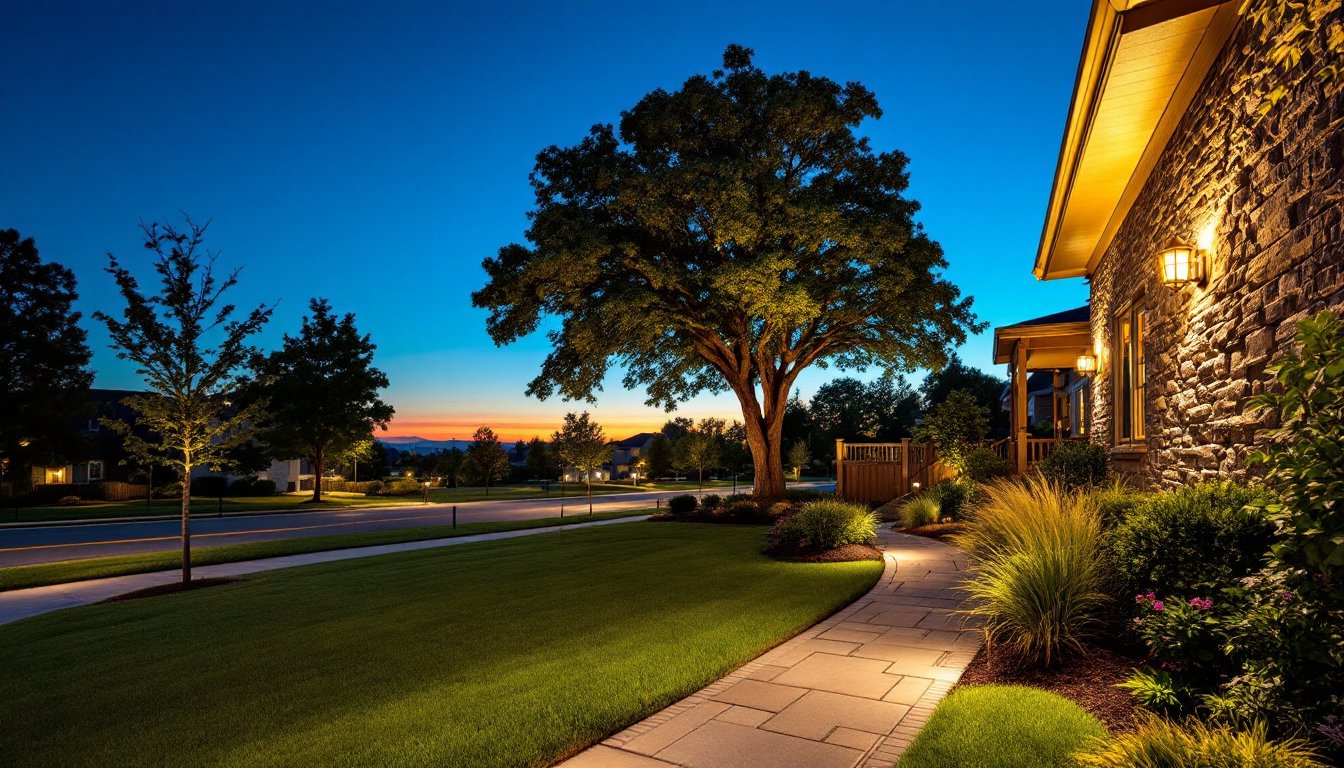
Good landscape lighting does more than illuminate, it extends livable space, adds curb appeal, and makes your property safer after dark. Whether it’s guiding guests along a flagstone path or showcasing a mature oak, the right fixtures change how your yard functions from dusk to dawn. This guide walks through proven outdoor lighting strategies, from solar stake lights to transformer-based systems, with real-world installation advice and product types that hold up in weather. No fluff, just fixtures, wire gauges, and lumens that work.
Table of Contents
ToggleKey Takeaways
- Outdoor landscape lighting ideas extend livable space, boost curb appeal, and improve safety by using layered lighting zones with proper spacing, wire gauges, and lumen outputs tailored to each area.
- Pathway lighting requires 50–100 lumens per fixture spaced 4–8 feet apart with 3000K warm white LEDs and 6-inch-deep direct-burial wiring to prevent safety hazards and voltage drop.
- Accent lighting highlights trees, gardens, and architectural features using uplighting, downlighting, and grazing techniques on independent timers for energy efficiency and visual impact.
- Low-voltage wired systems deliver consistent performance year-round, while solar lights work best in full-sun areas but lack the reliability and output needed for security or task lighting.
- Smart outdoor lighting with motion sensors, photocells, and app-based scheduling provides automation and control, but requires proper Wi-Fi coverage or mesh network extenders for outdoor-rated devices.
- Security lighting needs overlapping coverage zones with 1,500–3,000 lumen motion-activated floodlights mounted 8–10 feet high and paired with photocells to eliminate dark entry points.
Pathway and Walkway Lighting for Safety and Style
Pathway lighting serves two non-negotiable roles: preventing twisted ankles and creating visual flow from street to front door or patio. The standard approach uses low-profile fixtures spaced 4 to 8 feet apart along both sides of the walk, with beam angles wide enough to wash the path surface without glare at eye level.
Bollard lights (posts 18–24 inches tall) work well for wider walkways and driveways, casting pools of light downward. For tighter garden paths, flush-mount step lights or recessed wall lights tucked into retaining walls or stair risers keep the fixtures out of the way while lighting the tread. Use 3000K warm white LEDs to avoid the harsh blue cast of higher color temperatures.
Install fixtures on the same circuit with 14- or 16-gauge landscape wire rated for direct burial. Bury cable at least 6 inches deep (check local code) and use waterproof wire connectors at each fixture. If the run exceeds 100 feet, consider splitting into two circuits or upsizing wire to prevent voltage drop that dims fixtures farthest from the transformer.
Avoid the temptation to over-light. Pathways need enough lumens to see obstacles, 50 to 100 lumens per fixture is plenty. More than that creates light pollution and washes out the rest of the yard.
Accent Lighting to Highlight Trees, Gardens, and Architectural Features
Accent lighting is where personality shows up. Uplighting a tree trunk with a narrow-beam spotlight (15–30 degrees) creates dramatic shadows in the canopy. Downlighting from tree branches mimics moonlight and works beautifully over seating areas or garden beds. Use well lights (in-ground canisters with adjustable heads) for uplighting and bullet-style fixtures mounted 8 to 12 feet high for downlighting.
For flower beds and shrubs, wash lighting with wider beams (60–120 degrees) prevents harsh spotlighting. Position fixtures 2 to 3 feet away from plantings and aim at a slight angle to reduce glare. LED fixtures with adjustable color temperature (2700K to 3000K) help match the warmth of evening light without overpowering foliage.
Architectural features, columns, stone walls, pergolas, benefit from grazing light, where fixtures are mounted close to the surface to emphasize texture. Mount lights 6 to 12 inches from the wall and use narrow beams to skim the surface. For water features, submersible LED fixtures rated IP68 handle full immersion and typically draw 3 to 10 watts.
Always use a separate zone or timer for accent lighting. It’s the first layer to turn on at dusk and often the last to shut off, so independent control saves energy and extends fixture life.
Ambient Deck and Patio Lighting for Outdoor Living Spaces
Decks and patios live or die by ambient lighting. Too bright, and it feels like a parking lot. Too dim, and nobody can see their plate. The goal is soft, layered light at multiple heights: overhead for general illumination, mid-level for ambiance, and low for safety.
Post cap lights (solar or low-voltage) fit standard 4×4 or 6×6 railing posts and provide 10 to 30 lumens per cap, enough to define the perimeter without glare. For a more refined look, recessed deck lights install flush into stair treads, risers, or fascia boards. Use 12V AC LEDs rated for wet locations (look for UL 2108 or IP65 minimum).
Overhead options include string lights (Edison bulbs or globe styles) hung on guide wire or mounted to posts. Use 12- or 14-gauge wire for spans over 25 feet and check the fixture’s maximum run length, most cap out around 15 to 20 sockets. For permanent installations, consider flush-mount ceiling fixtures under covered patios, wired to a standard junction box and controlled by a dimmer switch.
Don’t forget task lighting near grills or outdoor kitchens. A single 20-watt LED floodlight or under-cabinet strip light mounted above the prep area makes a huge difference. Wire these to a separate switch so they’re not tied to mood lighting zones used for entertaining.
Safety note: Any electrical work on patios requires GFCI protection. If you’re adding outlets or hardwired fixtures, use a GFCI breaker or receptacle and keep junction boxes accessible for future maintenance.
Security and Perimeter Lighting Solutions
Security lighting prioritizes coverage and deterrence over aesthetics. The perimeter of a property, gates, driveways, side yards, and rear entries, should have overlapping light zones that eliminate dark pockets where someone could approach unnoticed.
Motion-activated floodlights are the workhorse here. Look for LED heads with 1,500 to 3,000 lumens, adjustable detection angles (up to 240 degrees), and sensitivity controls to reduce false triggers from animals or passing cars. Mount fixtures 8 to 10 feet high and angle them downward to cover entryways without blinding neighbors. Pair them with photocells so they only activate after dark.
For continuous perimeter lighting, dusk-to-dawn wall packs or area lights with photocell sensors work well on garages, sheds, and fence lines. These typically draw 15 to 30 watts and provide steady illumination all night. If light trespass is a concern, use fixtures with full cutoff optics that direct light downward rather than outward.
Smart security lights with integrated cameras (brands like Ring or Eufy) add video recording and two-way audio. They require standard 120V wiring and a Wi-Fi connection. Installation is straightforward if you’re replacing an existing fixture, but running new wire may require an electrician, especially if you’re crossing finished interior spaces.
Wire all security lighting to a dedicated circuit with a manual override switch inside the home. This lets homeowners disable motion sensors when working in the yard without triggering constant activation.
Solar vs. Low-Voltage Wired Lighting: Which Is Right for Your Project?
Solar lights are plug-and-play: no wire, no transformer, no electrician. They work best in full-sun areas where panels can charge for 6 to 8 hours daily. Expect 5 to 50 lumens per fixture, depending on price and panel size. Higher-end models use replaceable 18650 lithium batteries and can last 8 to 12 hours per charge. Cheaper units with NiMH batteries fade after a year or two.
Solar works for pathway markers, accent stakes, and decorative lanterns. It doesn’t work for high-output needs like security floods or consistent task lighting. If your yard has mature trees or faces north, solar performance drops significantly.
Low-voltage wired systems run on 12V AC or DC via a transformer stepped down from household 120V. They deliver consistent brightness regardless of weather and support much higher lumen outputs (100 to 500+ lumens per fixture). Installation requires trenching, wire runs, and wire connectors, but the result is reliable and scalable.
Use low-voltage for any lighting that needs to perform year-round: pathways, decks, accent lighting, and security zones. Budget around $200 to $600 for a starter kit with a 150- to 300-watt transformer, fixtures, wire, and connectors. Add a photocell and timer to automate on/off cycles.
One middle ground: solar-charged low-voltage systems. These use a central solar panel and battery to power a 12V circuit, splitting the difference between solar simplicity and wired reliability. They’re newer to the market but worth considering for remote areas without easy access to AC power.
Smart Outdoor Lighting and Automation Tips
Smart outdoor lighting isn’t just about app control, it’s about scheduling, zoning, and integration with other systems. Most smart landscape setups use one of three approaches: smart bulbs in standard fixtures, smart switches/dimmers controlling wired circuits, or smart hubs managing low-voltage transformers.
Smart bulbs (Wi-Fi or Zigbee) screw into existing sockets and connect directly to a phone app or voice assistant. They work for porch lights, post lamps, and any fixture with a standard E26 base. Downside: if someone flips the physical switch off, the bulb loses power and can’t be controlled remotely.
Smart switches or dimmers replace the wall switch controlling outdoor circuits. Brands like Lutron Caseta, Leviton, and GE offer models compatible with Alexa, Google Assistant, and Apple HomeKit. This approach works for hardwired fixtures (floods, wall sconces, string lights) and keeps physical control intact. Installation requires basic wiring knowledge, connecting line, load, neutral, and ground.
For low-voltage systems, smart transformers or plug-in controllers (like those from Kichler or FX Luminaire) manage multiple zones, dimming, and schedules. Some models integrate with lighting control systems that unify indoor and outdoor lighting under one app. If you’re planning a whole-property install, this is the cleanest long-term solution.
Automation ideas:
- Sunset/sunrise triggers turn lights on and off based on your location, adjusting automatically through the year.
- Motion + time rules activate security lights only during certain hours.
- Zone scheduling dims accent lighting after 11 PM while keeping pathway lights on all night.
- Geofencing turns on welcome lighting when your phone approaches home.
One caution: outdoor smart devices need strong Wi-Fi or a mesh network extender if fixtures are far from the router. Zigbee hubs with outdoor-rated repeaters (like Philips Hue outdoor fixtures) extend range more reliably than Wi-Fi alone.
Conclusion
Landscape lighting isn’t a one-weekend project, and it shouldn’t be. Start with one zone, paths, deck, or perimeter, and expand as budget and ambition allow. Invest in quality transformers and fixtures rated for wet locations, run proper wire depths, and don’t skimp on connectors. The difference between a system that works for two seasons and one that works for ten comes down to details: wire gauge, IP ratings, and whether you used silicone-filled connectors instead of twist caps. Plan for zones, automate what makes sense, and always leave a little slack in the wire for future adjustments.