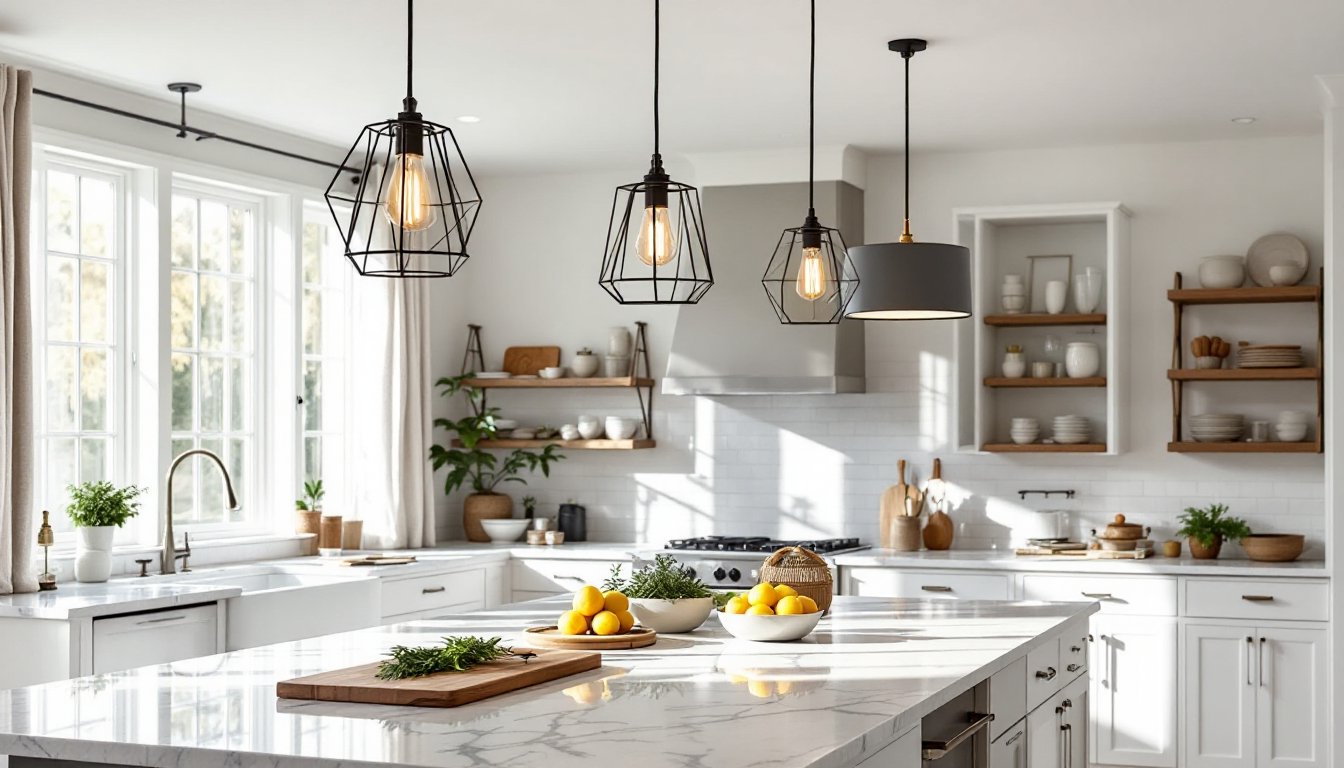
Kitchen pendant lights do more than just brighten a workspace, they define a room’s character. While recessed cans and flush-mounts fade into the ceiling, a well-chosen pendant hangs at eye level, commanding attention and setting the tone for everything that happens below. Whether someone’s dicing onions at the island or hosting a wine-and-cheese night, the right fixture makes that moment feel intentional. In 2026, homeowners are moving past cookie-cutter globe pendants, opting instead for sculptural pieces, artisan finishes, and designs that blur the line between lighting and art.
Table of Contents
ToggleKey Takeaways
- Unique kitchen pendant lighting serves as both a functional task light and a design statement, combining focused illumination for food prep with sculptural appeal that elevates room character.
- Proper scaling and spacing—12–18 inch diameters for standard islands with 24–30 inch center-to-center spacing—ensures pendants balance visual impact and functionality without appearing undersized or overwhelming.
- Timeless finishes like brushed brass, matte black, and hand-finished ceramics have lasting design appeal, while trendy options like millennial pink risk dating a space within a few years.
- Hanging pendants 30–36 inches above countertops prevents head bumping and maintains adequate task lighting, while matching metal finishes to existing hardware creates a cohesive kitchen aesthetic.
- Professional electrical installation is essential to ensure junction boxes are code-compliant, properly rated for fixture weight, and equipped with dimmer-compatible LED drivers for safe operation.
- Unique kitchen pendant lights create visual separation in open-concept layouts and signal thoughtful design choices that can enhance resale appeal during home showings.
Why Choose Unique Pendant Lights for Your Kitchen?
Standard builder-grade fixtures get the job done, but they don’t leave an impression. Unique pendants serve as functional focal points, delivering task lighting where it’s needed most while doubling as a design statement.
Task lighting meets personality. Islands and peninsulas demand focused light for prep work. Pendants drop illumination directly onto cutting boards and cooktops without creating harsh overhead glare. But unlike utilitarian options, distinctive designs inject personal style into a space that’s otherwise dominated by appliances and cabinetry.
Room definition without walls. Open-concept layouts blur kitchen boundaries. A row of eye-catching pendants over an island creates visual separation between cooking and living zones without installing physical dividers. The fixtures act as a ceiling plane marker, signaling “this is the kitchen” to anyone walking through.
Resale appeal with character. Generic fixtures don’t move the needle during showings. Buyers notice thoughtful lighting, especially when it’s scaled correctly and complements finishes. A trio of handblown glass pendants or matte-black geometric cages suggests the homeowner sweated the details elsewhere, too.
One caveat: “unique” doesn’t mean “untested.” Avoid trendy finishes that’ll date the space in three years. Brushed brass, matte black, raw wood, and hand-finished ceramics have staying power. Millennial pink and rose gold? Less so.
Types of Unique Kitchen Pendant Lighting
Geometric and Modern Sculptural Designs
Cage pendants frame the bulb in open metalwork, hexagons, tetrahedrons, or asymmetric wireframes. They cast interesting shadows and work well in kitchens with clean lines and minimal upper cabinetry. Look for powder-coated steel or brushed aluminum in 12–16 inch diameters for islands: anything smaller reads as undersized.
Cluster pendants group multiple small fixtures at staggered heights on a single canopy. They’re ideal for filling vertical space over high ceilings without installing a single oversized drum that feels hotel-lobby stiff. Mix finishes, like smoked glass globes with brass fittings, for layered visual interest. Installation requires a multi-port canopy: if the existing junction box only has one outlet, an electrician will need to swap it or add a surface-mount splitter.
Linear suspensions stretch horizontally, delivering even light across a long island or galley-style prep zone. Think sleek LED bars in blackened steel or a series of connected shades. These suit modern and transitional kitchens but can overwhelm traditional spaces. Standard widths run 36–48 inches: measure the island and aim for the fixture to span about two-thirds its length.
For kitchens where ambient lighting is already handled by track systems, sculptural pendants add that finishing design layer without overcomplicating the lighting plan.
Vintage and Industrial Statement Pieces
Enamelware barn lights bring farmhouse grit without feeling rustic-chic overdone. The classic gooseneck profile and baked enamel finish (often in deep green, navy, or red) suit kitchens with Shaker cabinetry or open shelving. They’re durable, originally designed for exterior use, and the enamel cleans easily, a plus in grease-prone zones.
Edison bulb cages pair exposed filament bulbs with minimalist metal guards. These nod to early 20th-century factory lighting and pair well with butcher-block counters, subway tile, and matte black fixtures. Swap standard incandescents for LED filament bulbs (around 800 lumens per pendant) to avoid excessive heat and short bulb life. The aesthetic relies on visible bulbs, so choose quality LEDs that mimic tungsten glow.
Repurposed and artisan fixtures include blown-glass globes, hand-thrown ceramic shades, or upcycled materials like wine bottles and industrial pulleys. These one-off pieces add soul but require vetting. Check that the fixture is UL-listed even if it’s handmade: a stunning pottery shade won’t pass inspection if the socket and wiring don’t meet code.
Many restaurant lighting setups use similar vintage-industrial pendants to create warm, inviting dining zones, a tactic that translates well to residential kitchens where the island doubles as a casual eating area.
How to Choose the Right Unique Pendant for Your Kitchen
Scale to the island, not the room. A common mistake: choosing fixtures based on overall kitchen size rather than the island’s footprint. For a 6-foot island, aim for pendants in the 12–18 inch diameter range. Smaller fixtures look skimpy: oversized drums block sightlines and feel oppressive.
Spacing matters. Hang pendants 24–30 inches apart (center to center) for even light distribution. For a three-pendant setup over a standard island, this usually places the outer fixtures about a foot in from the island’s edge. Avoid centering a single pendant unless the island is narrow (under 4 feet) or the fixture is a large linear suspension.
Height affects function and conversation. The bottom of the shade should hang 30–36 inches above the countertop. Lower than 30 inches and tall users will bump their heads: higher than 36 inches and the light diffuses too much for task work. If the island includes seating, test the height by sitting on a stool, no one wants a pendant blocking eye contact across the counter.
Match finish to existing hardware. If cabinet pulls and faucet are brushed nickel, mixing in unlacquered brass pendants creates finish chaos. Stick to one or two metal tones throughout the kitchen. Mixed metals can work, warm brass with cool stainless, for instance, but it’s a deliberate design choice, not an accident.
Consider light color temperature. For kitchens, 2700–3000K (warm white) works for most situations, providing enough clarity for food prep without the sterile feel of daylight bulbs. If the kitchen opens to living spaces lit at 2700K, match it. Mixing 3000K pendants with 2700K recessed lights creates a noticeable color shift.
Design inspiration from sites like Remodelista’s pendant roundups and homify’s kitchen galleries can help narrow down style direction, but always verify dimensions and installation requirements before committing.
Installation Tips for Kitchen Pendant Lighting
Check the box and circuit first. Most pendant installations tie into an existing junction box. If there isn’t one over the island, adding it means cutting drywall, fishing cable, and possibly opening the ceiling from above. That’s a multi-hour job, not a Saturday morning swap. Hire a licensed electrician unless there’s already a box in place.
Confirm the box is rated for the fixture weight. Standard round pancake boxes support up to about 50 pounds, but oversized glass or metal pendants can exceed that. Check the fixture specs and swap in a fan-rated box if needed, it’s braced to a joist and handles heavier loads.
Use a dimmer-compatible LED driver. Many modern pendants come with integrated LEDs or require specific bulb types. If dimming is desired (and it should be, task lighting at full blast isn’t ideal for evening ambiance), ensure the fixture supports it. Not all LED drivers work with standard triac dimmers: some need ELV (electronic low-voltage) dimmers to avoid flickering.
Adjust pendant height before securing. Most fixtures include adjustable cord or chain. Measure 30–36 inches from countertop to the bottom of the shade, accounting for the fixture’s overall height. Mark the cord, then secure it at the canopy. Cutting excess cord is fine, but leave a few extra inches coiled in the canopy in case adjustments are needed later.
Install in sequence if wiring multiple pendants. For a three-pendant setup on a single switch, the electrician will likely daisy-chain the junction boxes or use a multi-port canopy. If DIYing, confirm the circuit can handle the combined wattage. A 15-amp kitchen circuit supports around 1,440 watts at 120V, but most LED pendants draw under 15 watts each, plenty of headroom.
Safety gear: Wear safety glasses when working overhead, especially if cutting drywall or drilling into joists. If working from a ladder on a slick tile floor, have a second person steady it. And always shut off power at the breaker, not just the switch, test with a non-contact voltage tester before touching wires.
One often-missed detail: cord or chain finish. Black cord on a white ceiling stands out. Many fixtures offer finish options (black, white, brass, chrome). Match the cord to the ceiling or the fixture finish for a cleaner look. Some pendants use fabric-wrapped cord, which adds texture but can collect dust in a kitchen, plan to wipe it down periodically.
Conclusion
Choosing unique kitchen pendant lighting isn’t about chasing trends, it’s about finding fixtures that work as hard as they look good. Scale them right, wire them safely, and pick finishes that’ll age well alongside the rest of the kitchen. Get those details right, and the pendants will do the rest.