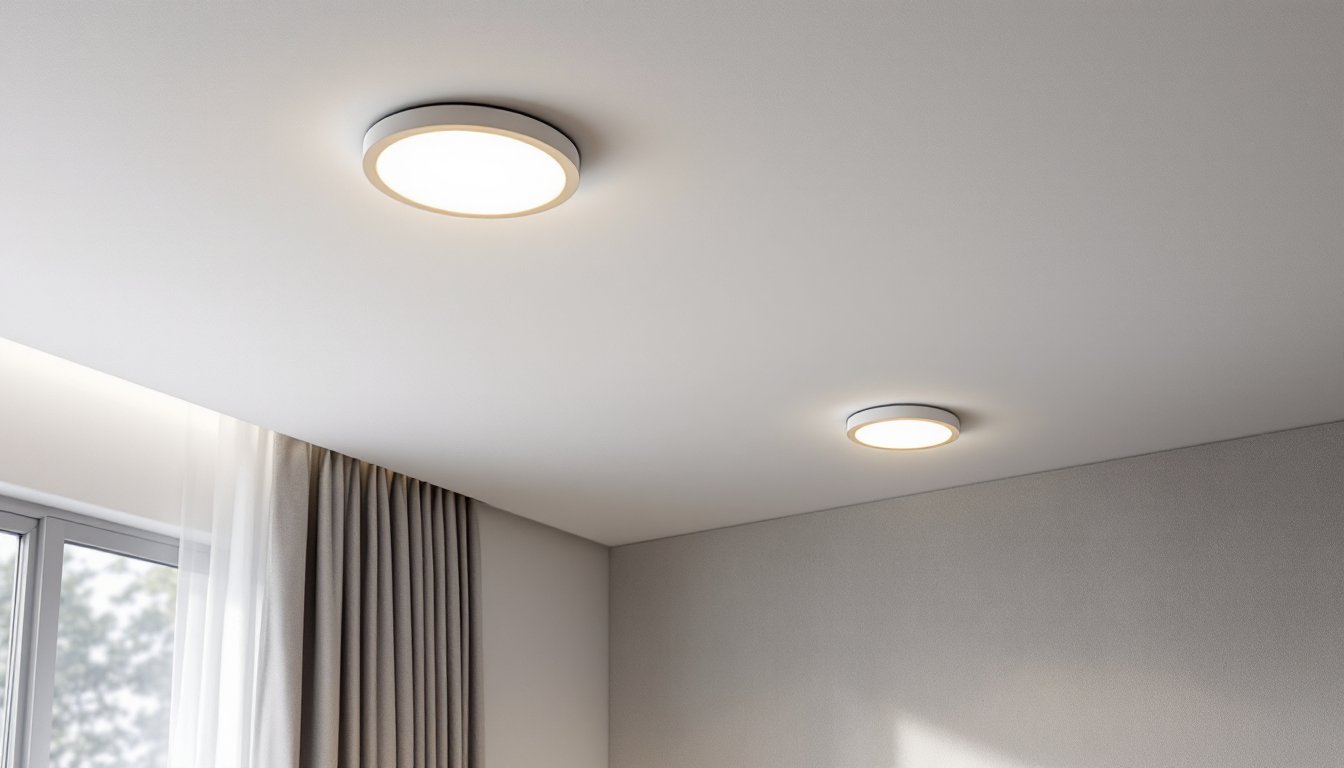
Canless recessed lighting has flipped the script on ceiling lighting. Gone are the days of wrestling with bulky housings, guessing on clearances, and hoping your joists cooperate. These slim fixtures mount directly to drywall, cutting installation time in half and opening up possibilities in ceilings where traditional can lights wouldn’t fit. They’re becoming the go-to choice for remodels and new construction alike, and for good reason. If you’ve been putting off a lighting upgrade because traditional recessed fixtures seemed like too much work, canless options might be exactly what you need.
Table of Contents
ToggleKey Takeaways
- Canless recessed lighting cuts installation time in half by eliminating bulky metal housings and integrating the LED, driver, and trim into one compact unit that mounts directly to drywall.
- These fixtures work in ceilings with as little as 2 inches of clearance, making them ideal for retrofits and remodels where traditional can lights won’t fit.
- Canless recessed lighting uses 75% less energy than incandescent bulbs and lasts 50,000+ hours with built-in LED modules, delivering consistent brightness without bulb compatibility guesswork.
- Space fixtures 4 to 6 feet apart for general lighting, verify the circuit isn’t overloaded, and always use a voltage tester before touching any wires during installation.
- Selecting the right color temperature (2700K–3000K for living spaces, 3500K–4000K for kitchens) and beam angle ensures optimal mood and function without swapping bulbs later.
What Is Canless Recessed Lighting?
Canless recessed lighting ditches the traditional metal housing (the “can”) that sits above your ceiling. Instead, the fixture is a complete integrated unit, LED module, driver, junction box, and trim all in one compact package. You cut a smaller hole (typically 3″ to 6″ diameter), pull your electrical wire through, and secure the fixture directly to the drywall with spring-loaded clips.
Most canless fixtures are LED-only and non-replaceable, meaning the LED is built in for the life of the fixture (usually rated 50,000+ hours). The driver converts line voltage (120V AC) to the low voltage the LEDs need, and it’s tucked right into the fixture housing. Because there’s no separate can, the entire assembly sits nearly flush with your ceiling, often protruding less than an inch into the ceiling cavity.
This design works in ceilings with as little as 2 inches of clearance, making them ideal for spaces with shallow cavities, ductwork, or other obstructions that would block a traditional 6″ or 8″ housing. They’re IC-rated (insulation contact) by default since there’s minimal heat buildup, and most are also airtight, which helps with energy efficiency.
Key Benefits of Choosing Canless Recessed Lights
Faster installation tops the list. A typical canless fixture installs in 15–20 minutes once the hole is cut. No need to wrestle with can housings, adjust mounting bars, or fuss with separate trim rings. The integrated design means fewer parts and fewer chances for something to go wrong.
Shallow clearance requirements make canless fixtures a lifesaver in remodels. If you’ve got a second-floor ceiling with only 3″ of space before you hit a joist or HVAC duct, a traditional recessed can won’t fit. Canless fixtures slip right in. This also makes them suitable for retrofit projects where you’re not tearing out the ceiling.
Energy efficiency is baked in. LEDs use roughly 75% less energy than incandescent bulbs and last 25 times longer. Because the LED and driver are optimized together in the factory, you get consistent color temperature and brightness with no guesswork on bulb compatibility. Most canless lights range from 8W to 15W and deliver 650 to 1,200 lumens, equivalent to a 65W to 100W incandescent.
Cleaner aesthetics come from the low-profile design. There’s no visible gap between trim and ceiling, and the fixture sits nearly flush. Many models offer adjustable color temperature (selectable between 2700K, 3000K, 4000K, and 5000K) via a switch on the fixture or a remote, letting you dial in the exact look you want without swapping bulbs.
Less air leakage translates to better insulation performance. Traditional recessed cans are notorious for creating thermal bridges and letting conditioned air escape into attics. Canless fixtures are airtight by design, which can improve HVAC efficiency and comfort.
How Canless Recessed Lighting Differs from Traditional Can Lights
Traditional recessed lighting uses a separate metal housing (the can) that mounts between joists with brackets or directly to framing. You then install a separate bulb socket, bulb, and trim ring. The housing typically requires 6″ to 8″ of ceiling depth and creates a large cavity above the ceiling line. This setup allows you to change bulbs, but it also means more components that can fail or need adjustment.
Canless fixtures eliminate all of that. The LED, driver, and trim are one sealed unit. There’s no socket, no bulb to replace, and no separate can. When the LED eventually dims after 50,000 hours or so (that’s roughly 25 years at 5 hours per day), you replace the entire fixture. That might sound wasteful, but in practice, the long lifespan and lower upfront cost make it a wash or better.
Hole size is another major difference. Traditional cans need a 6″ or larger cutout: canless fixtures often use 4″ to 6″ holes, which means less patching if you’re retrofitting. The smaller hole also means less disruption to insulation and less chance of hitting a joist or obstruction.
Wiring is simpler with canless fixtures. Most have an integrated junction box with wire leads or push-in connectors. You bring your house wiring into the junction box, make your connections, and you’re done. Traditional cans require a separate junction box (sometimes built into the housing, sometimes external) and more wire management inside the housing.
Adjustability varies. Some canless models offer gimbal or directional features, allowing you to tilt the light, while others are fixed. Traditional cans have a wider range of trim options, baffle, reflector, eyeball, pinhole, which can be swapped out. With canless, you’re locked into the trim style you buy.
Installation Guide: How to Install Canless Recessed Lighting
Check your local codes first. Most jurisdictions require electrical work to be inspected, and some require a licensed electrician for anything beyond fixture replacement. If you’re comfortable with basic wiring and your local code allows DIY electrical, this is a straightforward project.
Tools and Materials You’ll Need
- Canless recessed light fixtures (count your layout)
- Hole saw (size per manufacturer specs, usually 4″ to 6″)
- Drill
- Voltage tester or non-contact voltage detector
- Wire strippers
- Wire nuts or push-in connectors (often included with fixture)
- Fish tape or wire snake (if running new circuits)
- Safety glasses and dust mask
- Headlamp or work light
Step-by-Step Installation
-
Turn off power at the breaker. Verify with a voltage tester that the circuit is dead before touching any wires.
-
Plan your layout. Space fixtures 4 to 6 feet apart for general lighting. Keep them at least 12 inches from walls to avoid harsh shadows and meet fire code clearances. Use a stud finder to locate joists and mark hole locations on the ceiling with a pencil.
-
Cut the holes. Attach the appropriately sized hole saw to your drill and cut slowly to avoid tearing the drywall face. If you’re working in a finished ceiling, have a vacuum running or tape a bag below the hole saw to catch debris. Check inside the hole with a flashlight to make sure you’re clear of framing, ducts, or wiring before proceeding.
-
Run your wiring. If you’re adding new fixtures, you’ll need to run 14/2 or 12/2 NM cable (Romex) from your switch or existing junction box to each fixture location. Use a fish tape to snake cable through the ceiling cavity. Most canless fixtures can be daisy-chained, so you can run cable from one fixture to the next. Follow the manufacturer’s wiring diagram and respect maximum fixture counts per circuit (usually 10–12 fixtures on a 15-amp circuit, 15–18 on a 20-amp circuit, depending on wattage).
-
Make electrical connections. Pull the house wiring through the fixture’s junction box. Strip about 1/2″ of insulation from the wire ends. Connect black to black (hot), white to white (neutral), and green or bare copper to the ground wire or grounding screw. Secure connections with wire nuts or push-in connectors as provided. Tuck wires neatly into the junction box.
-
Install the fixture. Most canless lights use spring clips that compress when you push the fixture up into the hole. Once the clips clear the drywall, they expand and grip the back side, locking the fixture in place. Some models have adjustable clips that you squeeze with your fingers: others use a simple push-fit design. The trim should sit flush against the ceiling with no gaps.
-
Restore power and test. Flip the breaker back on and check each fixture. If a light doesn’t come on, turn off the breaker again and double-check your connections. Many canless fixtures have a color temperature selector switch on the side, adjust it before final installation if you want to change the default setting.
Permit note: Even though canless lights are easier to install, electrical permits are typically required for new circuits or adding fixtures to an existing circuit. Check with your local building department. If you’re simply replacing old fixtures on an existing circuit (retrofit), permits are less common but still vary by jurisdiction.
Choosing the Right Canless Recessed Lights for Your Space
Lumen output determines brightness. For general ambient lighting, aim for 50–75 lumens per square foot. A 120-square-foot bedroom needs roughly 6,000–9,000 total lumens: if you’re installing eight fixtures, that’s 750–1,125 lumens per fixture. Task lighting (over a kitchen counter or desk) should be brighter, 100+ lumens per square foot.
Color temperature affects mood and function. 2700K–3000K (warm white) works well in living rooms, bedrooms, and dining areas. 3500K–4000K (neutral white) suits kitchens, bathrooms, and home offices. 5000K+ (daylight) is best for garages, workshops, or anywhere you need crisp, focused light. Many canless fixtures offer selectable color temperature, which gives you flexibility.
Beam angle controls spread. A narrow beam (25–40 degrees) creates focused pools of light, good for accent or task lighting. A wide beam (90–120 degrees) spreads light evenly, better for ambient lighting. Most standard canless fixtures have a 90–110 degree beam, which works for general use.
Dimming compatibility matters if you plan to use dimmer switches. Not all canless LEDs dim smoothly: some flicker or cut out at low levels. Look for fixtures labeled “dimmable” and check the manufacturer’s recommended dimmer models. Lutron and Leviton both publish compatibility lists.
Wet or damp ratings are required for bathrooms and covered outdoor areas. Standard canless fixtures are for dry locations only. If you’re installing in a shower, above a tub, or on a covered porch, you need a fixture rated for damp or wet locations (check the UL listing).
Directional vs. fixed fixtures offer different control. Fixed canless lights point straight down. Gimbal or directional models let you tilt the LED module to highlight artwork, accent walls, or specific areas. Directional fixtures cost a bit more but add versatility.
Common Mistakes to Avoid When Installing Canless Recessed Lighting
Ignoring clearance above the ceiling. Even though canless fixtures need less space than traditional cans, they still need clearance. Measure your ceiling cavity depth before buying. If you’ve got 2″ or less, double-check the fixture specs, most need at least 2″ to fit the driver and junction box.
Cutting holes before checking for obstructions. Always drill a small pilot hole and probe with a bent wire or inspection camera before committing to the full hole saw cut. You don’t want to hit a joist, pipe, or electrical wire halfway through.
Overloading the circuit. Even low-wattage LEDs add up. Ten 12W fixtures draw 120W total, which is well within a 15-amp circuit’s capacity (1,800W), but if that circuit already powers outlets or other lights, you could trip the breaker. Add up the total load and leave a 20% safety margin.
Forgetting about insulation contact. If you’re installing in an insulated ceiling (most attics), make sure your fixtures are IC-rated. Most canless lights are, but verify before you buy. Non-IC fixtures require a 3″ clearance from insulation, which defeats the purpose of going canless.
Mixing color temperatures in the same room. It’s jarring to have some fixtures at 2700K and others at 4000K. Even small differences (say, 3000K vs. 3500K) can be noticeable. Stick with one color temperature per room, and buy all your fixtures from the same batch if possible to ensure consistency.
Skipping the voltage test. Don’t assume the breaker you flipped is the right one. Use a non-contact voltage detector on the wires every time before you touch them. It takes five seconds and could save your life.
Not securing the fixture properly. If the spring clips don’t engage fully, the fixture will sag or fall out over time. You should feel resistance as the clips expand behind the drywall. Give the fixture a gentle tug after installation, it shouldn’t budge.
Conclusion
Canless recessed lighting strips away the complexity of traditional can lights without sacrificing performance or aesthetics. Whether you’re retrofitting a dated ceiling or planning a new build, these fixtures deliver clean, efficient light with minimal hassle. Measure carefully, respect your electrical limits, and don’t skip the permit check. Once they’re in, you’ll wonder why you waited so long.