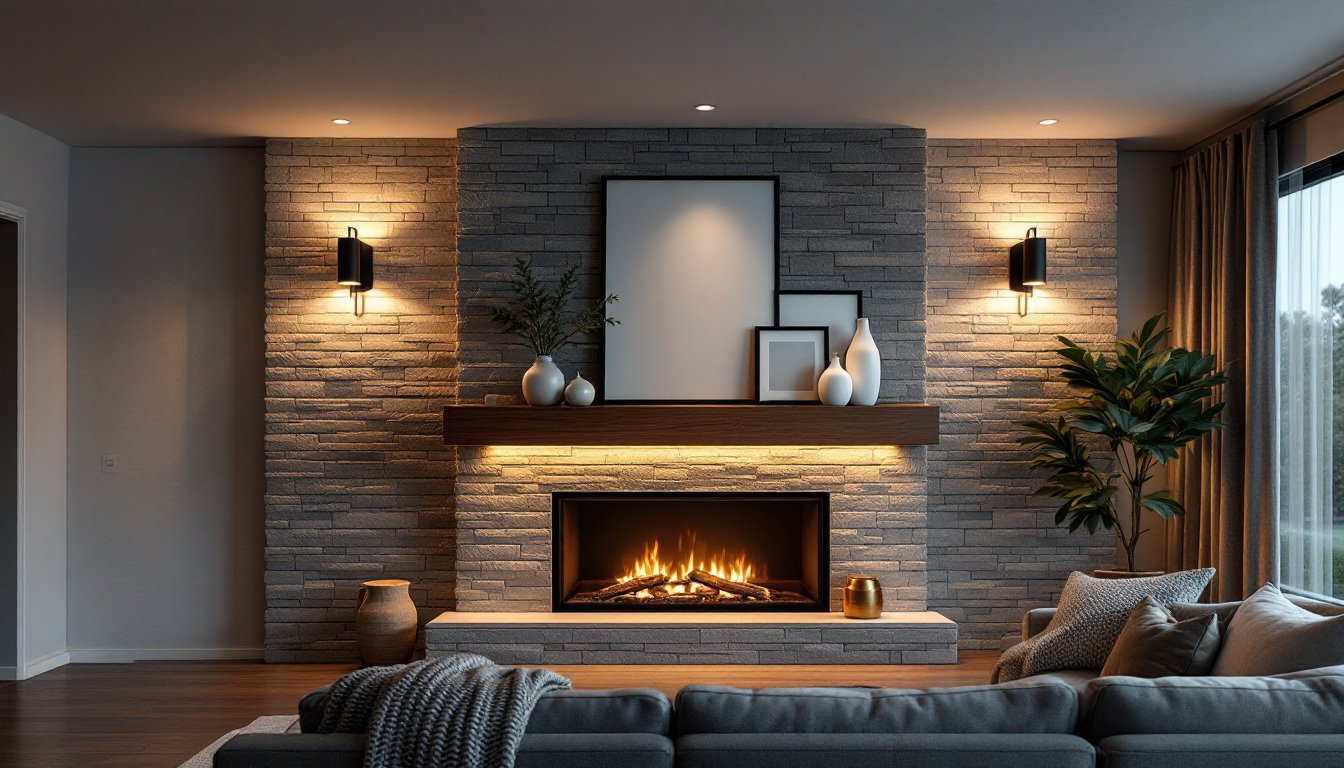
A fireplace draws the eye naturally, it’s already the focal point of most rooms. But without proper lighting, that architectural investment fades into the background after dark. Strategic fireplace lighting doesn’t just make the feature visible: it shapes how a room feels, highlights craftsmanship in stonework or tile, and turns a mantel into a gallery wall that works after sunset. Whether working with a gas insert, wood-burning hearth, or electric unit, lighting choices can emphasize texture, create depth, and solve common problems like dark corners or washed-out displays. This guide covers practical solutions that range from plug-and-play accent lights to hardwired installations, with honest takes on what works, what requires an electrician, and what to avoid.
Table of Contents
ToggleKey Takeaways
- Strategic fireplace lighting enhances architectural details, creates depth, and prevents your focal point from fading into the background after dark.
- Accent lighting on mantels using picture lights or battery-operated puck lights showcases displays, while two 40-watt-equivalent LED bulbs provide sufficient illumination for a 60-inch mantel.
- LED strip lighting mounted along mantels or fireplace surrounds offers continuous illumination that emphasizes texture, but must stay 6 inches away from active fireboxes to avoid heat damage.
- Recessed cans positioned for grazing (12–18 inches from the wall) emphasize texture, while wall-washing (24–36 inches out) creates even illumination, and proper positioning determines successful fireplace lighting.
- Sconces flanking a fireplace create symmetry and controllable ambient lighting when mounted at 60–72 inches depending on ceiling height and fireplace proportions.
- Smart bulbs and switches enable scheduling and dimming without rewiring, but hardwired smart switches are more reliable than individual smart bulbs for consistent control of fireplace accent lights.
Why Fireplace Lighting Matters for Your Home
Fireplace surrounds, especially those built with stacked stone, reclaimed wood, or decorative tile, lose their texture in flat overhead lighting. The ridges, grout lines, and grain that make the material interesting disappear under a single ceiling fixture.
Layered lighting solves this. Directional sources (sconces, picture lights, or recessed cans) cast shadows that emphasize three-dimensional surfaces. A stone veneer fireplace that looks bland in daylight can become dramatically sculptural with a pair of adjustable wall washers positioned at 30-degree angles.
Beyond aesthetics, lighting addresses function. Mantels often serve as display shelves for artwork, photos, or seasonal décor. Without dedicated illumination, those items fade into silhouette. Task lighting ensures the investment in styling actually gets seen.
Finally, lighting affects room balance. An unlit fireplace creates a visual void, especially in open-concept spaces where the feature wall anchors the entire layout. Even when the fire isn’t burning, proper lighting maintains the focal point and prevents the room from feeling lopsided.
Accent Lighting for Mantel Displays
Mantel accent lighting falls into two categories: overhead and uplighting. Picture lights, those slim fixtures mounted above the mantel or artwork, provide downward illumination that mimics gallery lighting. Look for adjustable arms (typically 9–16 inches in length) to position the light at the correct throw distance. LED picture lights draw 4–8 watts and stay cool enough to mount above combustible materials, but always verify clearance specs against your fireplace’s manual.
For a less traditional look, battery-operated puck lights or slim LED bars work well tucked behind decorative objects. A 3-inch diameter puck light hidden behind a stack of books or a vase casts uplight that creates dramatic shadows without visible hardware. These run on AA batteries or rechargeable lithium cells: expect 20–40 hours of runtime per charge depending on brightness settings.
Plug-in picture lights with hardwired conversion kits offer a middle ground. Install a junction box behind the mantel during construction or a remodel, then connect the fixture permanently. This eliminates cords but requires shutting off power at the breaker and basic electrical skills, if the box needs to be added after drywall is up, many homeowners find it easier to embrace the aesthetics of mood lighting that embraces visible cords as part of the design.
Wattage matters. For a 60-inch mantel, two 40-watt-equivalent LED bulbs (about 450 lumens each) provide sufficient accent lighting without overpowering the space. Dimmable bulbs add flexibility for adjusting ambiance.
Built-In LED Strip Lighting Solutions
LED strip lighting offers continuous, even illumination that’s especially effective for highlighting fireplace surrounds with deep recesses or textured finishes. 12V DC tape light (the most common residential spec) comes in 16.4-foot reels, with cut points every 2–3 inches marked by copper pads.
For stone or brick surrounds, mount the strip inside the firebox opening (if code allows and the fireplace isn’t active) or along the underside of a protruding mantel to create a floating effect. Use aluminum channel diffusers, these plastic or frosted covers prevent individual LED dots from showing and create a uniform light wash. Channels come in surface-mount, recessed, or corner-angle profiles: for fireplace applications, the 45-degree corner profile works well for grazing textured surfaces.
Installation basics: Strip light adheres with 3M VHB tape backing, but relying solely on adhesive near heat sources is risky. Add mechanical fasteners (small screws or clips) every 12–18 inches. Run low-voltage wire through wall cavities to a transformer, which steps down 120V AC to 12V DC. Transformers are rated by wattage, a 60-watt transformer handles approximately 16 feet of standard-density strip light (drawing about 3.6 watts per foot).
Heat is the enemy. Even low-voltage LED strip generates warmth. Keep strips at least 6 inches away from active fireboxes and verify the manufacturer’s maximum ambient temperature rating (usually 140°F). For gas fireplaces with surrounds that exceed this during operation, strip lighting isn’t a safe option, stick with traditional fixtures rated for high-temperature environments.
Color temperature affects mood significantly. 2700K (warm white) mimics incandescent bulbs and complements traditional wood or brick. 3000K (soft white) works for contemporary stone or concrete. RGB color-changing strips appeal to some, but most design professionals steer toward single-color installations for timeless appeal.
Recessed Lighting Around Your Fireplace
Recessed cans provide clean, architectural lighting without visible fixtures. For fireplace surrounds, positioning determines success. Grazing (placing cans 12–18 inches from the wall) emphasizes texture by casting shallow-angle light across the surface. Wall-washing (cans 24–36 inches out) creates even illumination with minimal shadows, better for smooth finishes like painted brick or tile.
Use adjustable or eyeball trim cans rather than fixed downlights. This allows aiming the beam directly at the fireplace feature instead of flooding the floor. Standard 4-inch or 6-inch housings work for most residential applications: the 6-inch provides more light output and better heat dissipation for high-lumen LEDs.
New construction vs. retrofit: New builds allow IC-rated (insulation contact) housings installed between joists before drywall. Retrofits use remodel cans with spring-loaded clips that grip finished ceilings from below, no attic access required. Remodel cans cost $15–$40 each depending on quality, while new-construction housings run $10–$25.
Electrical requirements: Recessed lighting ties into existing circuits, but calculate total load first. A 15-amp circuit handles roughly 1,800 watts: four 12-watt LED cans (60-watt equivalent) draw only 48 watts total, leaving plenty of headroom. But, adding cans often requires running new wire through walls or attics, if you’re uncomfortable fishing wire or don’t have attic access, this is electrician territory.
Code considerations: IRC and NEC require maintaining 3 inches of clearance between recessed housings and combustible materials unless the fixture is IC-rated. Near fireplaces, verify local amendments, some jurisdictions prohibit recessed lighting within a certain radius of the firebox opening. Always pull permits for new electrical work: inspectors specifically check for proper box fill, wire gauge (14 AWG minimum for 15-amp circuits), and clearances.
Statement Sconces and Wall Lighting
Sconces flanking a fireplace create symmetry and provide controllable ambient lighting. Unlike fixed recessed cans, sconces allow bulb and shade changes to update a room’s look without touching the wiring.
Mounting height matters. Traditional advice suggests 60–66 inches to the center of the fixture (roughly eye level), but fireplace proportions override generic rules. For an 8-foot ceiling with a 6-foot-tall stone surround, mounting sconces at 72 inches keeps them from feeling crammed. Measure proportionally: the sconce should sit in the upper third of the fireplace feature, not compete with the mantel.
Spacing: Place sconces 24–36 inches from the fireplace edge on each side, depending on wall width. Too close creates a crowded look: too far disconnects them from the feature. For walls wider than 12 feet, consider adding a second pair of sconces farther out to balance the space.
Hardwired vs. plug-in: Hardwired sconces require junction boxes behind the wall, best added during construction or remodeling. Plug-in sconces with fabric-wrapped cords offer a quicker solution but work only when outlets are nearby. Battery-operated sconces exist but rarely provide sufficient light output for primary illumination: treat them as decorative accents rather than functional fixtures.
Style-wise, modern track light heads offer adjustable directing of light beams, though traditional sconces with opaque shades (ceramic, metal, or glass) prevent glare and direct light up and down rather than outward. For stone or brick surrounds, matte black or oil-rubbed bronze finishes hide dust better than polished metals. Backplate size should be proportional, a 5-inch backplate works for most residential applications, while oversized 8–10 inch plates suit grand-scale fireplaces.
Smart Lighting and Modern Control Options
Smart bulbs and switches add scheduling, dimming, and voice control without rewiring. For fireplace lighting, this means adjusting ambiance from the couch or programming lights to mimic flame flicker when the fire isn’t burning.
Smart bulb limitations: Most smart LEDs (Philips Hue, LIFX, Wyze) require the physical switch to stay on, flipping it off cuts power, rendering the smart features useless. This frustrates households where someone inevitably hits the switch out of habit. For hard-wired sconces or picture lights, smart switches (Lutron Caséta, Leviton Decora) replace the wall switch entirely and control dumb bulbs reliably. These require a neutral wire in the switch box: older homes may lack this, necessitating a rewire or using switch models that don’t require neutral (less common, slightly pricier).
Dimming compatibility: Not all LED bulbs dim smoothly, some flicker or buzz at low settings. Check bulb specs for “dimmable” labeling and match with compatible dimmer switches. Magnetic low-voltage (MLV) or electronic low-voltage (ELV) dimmers work for LED strip lighting transformers: standard incandescent dimmers often cause flickering.
Integration options: Smart hubs (Amazon Echo, Google Home, Apple HomeKit) allow creating scenes, “Fireplace Evening” could dim overhead lights, turn on sconces to 40%, and warm LED strip color temperature to 2200K. This level of control appeals to tech-forward homeowners but adds complexity: budget-conscious DIYers may prefer simple dimmers.
Contemporary fireplace design trends increasingly incorporate lighting as part of the initial build, with low-voltage controls and zoned circuits planned during framing. Retrofitting smart controls works but may expose limitations in existing wiring, especially in homes built before the 2000s when neutral wires weren’t code-required in switch boxes.
Conclusion
Effective fireplace lighting balances highlighting architectural detail with creating usable ambiance. Whether installing LED strips, running new circuits for recessed cans, or adding hardwired sconces, most projects fall within intermediate DIY skill levels, assuming comfort with basic electrical work and attention to code requirements. When in doubt, especially about junction box placement or circuit loads, bringing in a licensed electrician for a few hours ensures the installation is both safe and permits-compliant, leaving the styling and bulb choices in the homeowner’s hands where they belong.