LED outdoor lighting has gone from a premium upgrade to the default choice for homeowners, and for good reason. Whether you’re lighting a walkway, deterring intruders, or adding ambiance to a backyard, LEDs outperform every other bulb type in efficiency, longevity, and versatility. They’ve also gotten cheaper, smarter, and easier to install. If you’re planning an outdoor lighting project in 2026, understanding the options and how to deploy them properly makes the difference between a weekend win and a frustrating do-over.
Table of Contents
ToggleKey Takeaways
- LED outdoor lighting uses 75–80% less electricity than halogen or incandescent bulbs, with quality fixtures lasting 11–22 years, making them the most cost-effective choice for exterior applications.
- Choose LED fixtures based on lumens and color temperature, not wattage: 50–100 lumens for pathways, 1,800–3,000 for security floods, and warm white (2700K–3000K) for residential spaces.
- Low-voltage (12V or 24V) LED pathway systems are DIY-friendly and code-compliant, requiring only a properly sized transformer and landscape cable buried 6 inches deep.
- Mount motion-activated LED floodlights 8–10 feet high at a 20–30 degree angle to optimize security coverage and prevent light spill, while dusk-to-dawn fixtures provide constant illumination without motion sensing.
- Always verify IP65+ ratings for exposed outdoor LED fixtures, confirm GFCI protection for line-voltage circuits, and call 811 before digging to mark underground utilities and prevent costly damage.
Why LED Is the Best Choice for Outdoor Lighting
LEDs dominate outdoor lighting because they check every box that matters for exterior applications: energy efficiency, durability, and long runtime.
Energy consumption is the first draw. A typical 10-watt LED bulb outputs the same lumens as a 60-watt incandescent. Over a year, that difference adds up, especially when you’re running multiple fixtures on dusk-to-dawn photocells. Expect LED fixtures to use 75–80% less electricity than halogen or incandescent equivalents.
Lifespan is another major factor. Quality outdoor LEDs are rated for 25,000–50,000 hours, meaning a fixture that runs six hours per night could last 11–22 years before needing replacement. Compare that to halogens, which burn out in under two years, and the cost savings become obvious.
Weather resistance matters outdoors. LEDs generate far less heat than incandescent or halogen bulbs, which reduces the risk of fixture warping or lens cracking from temperature swings. Most outdoor-rated LED fixtures carry an IP65 or IP66 rating, meaning they’re sealed against dust and can handle direct water spray, critical for areas exposed to rain, snow, or sprinkler systems.
LEDs also tolerate cold starts better than CFLs, which dim or flicker in freezing temperatures. An LED fixture will fire up instantly at full brightness, even in subzero weather.
Finally, smart integration is now standard. Many LED fixtures support dimming, color-changing, motion detection, and app-based scheduling. If you’re running low-voltage landscape lighting, LED compatibility with 12V or 24V transformers simplifies retrofitting older systems.
Types of Outdoor LED Lighting for Every Space
Outdoor lighting isn’t one-size-fits-all. Each fixture type serves a different function, and understanding the options helps you design a cohesive, practical system.
Pathway and Landscape Lighting
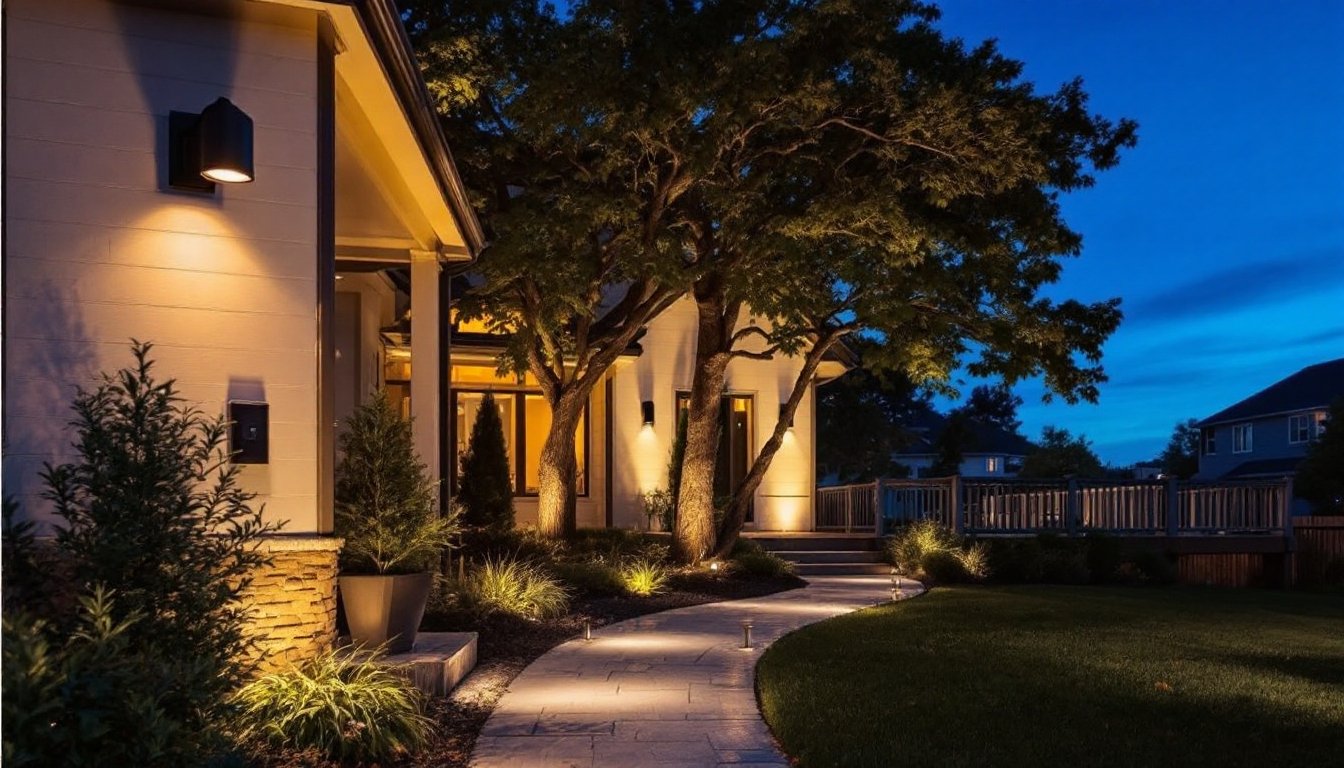
Pathway lights guide foot traffic and highlight landscaping without overwhelming the space. Most run on 12V or 24V low-voltage systems, which are safer and easier to install than line-voltage (120V) setups, no conduit or electrician required in most jurisdictions.
Stake lights are the most common. They push directly into soil and connect via a daisy-chained wire run back to a transformer. Look for fixtures with 3–5 watts per bulb and 100–200 lumens output. Anything brighter creates glare and defeats the purpose of subtle wayfinding.
Well lights (also called in-ground or bullet lights) mount flush with the ground or angle upward to wash light across a wall, tree, or architectural feature. Use IP67-rated fixtures here, they’ll be sitting in dirt and exposed to runoff. Brass or stainless steel housings outlast plastic.
Deck lights recess into stair risers, post caps, or under railings. They’re typically 1–2 watts each and ideal for safety lighting that doesn’t intrude on sightlines. Many outdoor smart lights now include motion sensors and scheduling, which can cut energy use even further.
Spacing matters. For paths, place fixtures 6–8 feet apart on alternating sides to create overlapping pools of light. Test before securing anything permanently, visibility changes dramatically once the sun sets.
Security and Floodlights
Security lighting prioritizes brightness and coverage. These fixtures typically run on 120V line voltage and require either a junction box or direct wiring into your home’s electrical system.
Motion-activated floodlights are the workhorse here. A good unit puts out 1,800–3,000 lumens and covers a detection zone of 180–270 degrees out to 70 feet. LED models draw 20–30 watts, compared to 150+ watts for halogen equivalents.
Mount floodlights 8–10 feet high, angled downward at 20–30 degrees. Aim too high and you’ll light the neighbors’ yard: too low and you’ll blind anyone approaching. Adjust the motion sensor’s sensitivity and timer duration during initial setup, most allow 30 seconds to 10 minutes of on-time per trigger.
Dusk-to-dawn fixtures use a photocell to turn on automatically at sunset. They’re better for areas needing constant illumination, like driveways or side gates. Pair them with 800–1,200 lumens for functional light without overkill.
Spotlights and bullet lights work for accent lighting, flagpoles, house numbers, or architectural details. Use narrow beam angles (15–25 degrees) to focus light and prevent spill. Many top-rated outdoor lights now offer adjustable color temperature, letting you switch between warm (2700K) and cool (5000K) whites depending on the season or event.
For security, consider fixtures with integrated cameras or smart alerts. These tie into home automation systems and send notifications when motion is detected, adding a layer of monitoring beyond just light.
How to Choose the Right Outdoor LED Fixtures
Picking the right fixture starts with matching the application to the specs. Don’t guess, get specific about lumens, color temperature, voltage, and environmental ratings.
Lumens, not watts, dictate brightness. For reference:
- 50–100 lumens: Subtle accent or pathway lighting
- 100–300 lumens: Stair treads, garden beds, deck rails
- 700–1,500 lumens: Entryway lighting, porch overhangs
- 1,800–3,000 lumens: Security floods, driveways, large yards
Color temperature changes the mood. 2700K–3000K (warm white) feels residential and inviting, ideal for front entries and patios. 4000K–5000K (cool white) is crisper and better for task lighting, garages, and security zones. Avoid 6000K+ (daylight) unless you’re lighting a commercial lot, it’s harsh and uninviting.
Beam angle affects coverage. Narrow beams (15–30 degrees) create focused spots: wide beams (90–120 degrees) flood an area. Use narrow angles for uplighting trees or columns, wide angles for general illumination.
IP ratings tell you how sealed the fixture is. At minimum, use IP65 for exposed locations (rain, snow, hose spray). IP67 or IP68 is necessary for in-ground or submerged applications like pond lights or fountain fixtures.
Voltage determines wiring complexity. Low-voltage (12V or 24V) systems are DIY-friendly, code-compliant without conduit in most areas, and safer to work with. Line-voltage (120V) delivers more power and supports longer wire runs, but usually requires a permit and GFCI protection on outdoor circuits per NEC Article 210.8.
CRI (Color Rendering Index) matters if you’re lighting landscaping or architectural features. A CRI of 80+ renders colors naturally. Cheap LEDs with CRI below 70 make everything look washed out or yellowish.
Dimming compatibility is hit-or-miss with LEDs. If you’re planning to dim, confirm the fixture and transformer (for low-voltage) or dimmer switch (for line-voltage) are rated for LED loads. Incompatible dimmers cause flickering or buzzing.
Installation Tips for DIY Outdoor LED Lighting
Most LED outdoor lighting is DIY-friendly if you plan ahead and respect a few ground rules. Low-voltage systems are the easiest entry point: line-voltage work may require a permit and should involve a licensed electrician if you’re not confident with live wiring.
Low-voltage pathway and landscape lighting is the most forgiving project. Here’s the process:
- Plan the layout. Sketch your property, mark fixture locations, and measure cable runs. Buy 10–15% extra wire, you’ll need slack for connections and mistakes.
- Choose a transformer. Size it to handle 80% of the total wattage you’ll be running. If you’re installing ten 5-watt fixtures (50 watts total), use at least a 60-watt transformer. Mount it near an outdoor GFCI outlet, ideally under an eave or in a weatherproof box.
- Run the wire. Use 12- or 14-gauge landscape cable. Bury it 6 inches deep in a shallow trench or run it behind mulch and edging. Avoid sharp bends and don’t stretch the wire tight, leave a little slack for ground movement.
- Connect fixtures. Most low-voltage lights use quick-connect clips that pierce the wire insulation. No stripping required. Space connections so voltage drop doesn’t dim fixtures at the end of the run, keep runs under 100 feet for 12-gauge wire.
- Test before backfilling. Power on the transformer, walk the line, and confirm every fixture lights up. Adjust aim and replace any faulty units before you bury the wire.
Line-voltage security and flood lighting requires more care:
- Turn off power at the breaker. Use a non-contact voltage tester to confirm the circuit is dead before touching any wires.
- Mount a junction box if one isn’t present. Exterior boxes must be weatherproof (NEMA 3R rated minimum). Secure it to solid framing, wall studs, fascia, or soffit blocking.
- Run cable in conduit. NEC Article 300 requires protection for exposed outdoor wiring. Use PVC or metal conduit and weatherproof fittings. If you’re surface-mounting on siding, use conduit clips every 3 feet.
- Wire the fixture. Match black to black (hot), white to white (neutral), and green or bare copper to ground. Use wire nuts rated for outdoor use and wrap connections with electrical tape for extra protection. Tuck everything into the junction box and secure the cover.
- Install GFCI protection if the circuit doesn’t already have it. Outdoor receptacles and lights within 6 feet of grade must be GFCI-protected per code.
- Seal all entry points. Use silicone caulk around the fixture base, conduit fittings, and any penetrations through siding to keep water out.
Motion sensors and photocells usually connect inline between the power source and fixture. Follow the manufacturer’s wiring diagram, some require a neutral, others don’t.
Pro tip: Before you dig or drill, call 811 to have underground utilities marked. Hitting a gas, electrical, or water line turns a lighting project into an expensive disaster.
For more complex layouts or multi-zone systems, there are detailed DIY wiring tutorials that walk through everything from transformer sizing to troubleshooting voltage drop.
PPE: Always wear safety glasses when drilling overhead, gloves when handling wire or working with sharp fixtures, and a dust mask if cutting through masonry or wood.
Conclusion
LED outdoor lighting delivers the trifecta: lower energy bills, less maintenance, and better control over how your property looks after dark. Whether you’re installing pathway lights on a weekend or upgrading to smart security floods, the technology is mature, affordable, and well within reach of a confident DIYer. Measure twice, respect the electrical code, and don’t skip the prep work, your exterior lighting will outlast most of the other upgrades you make to the house.