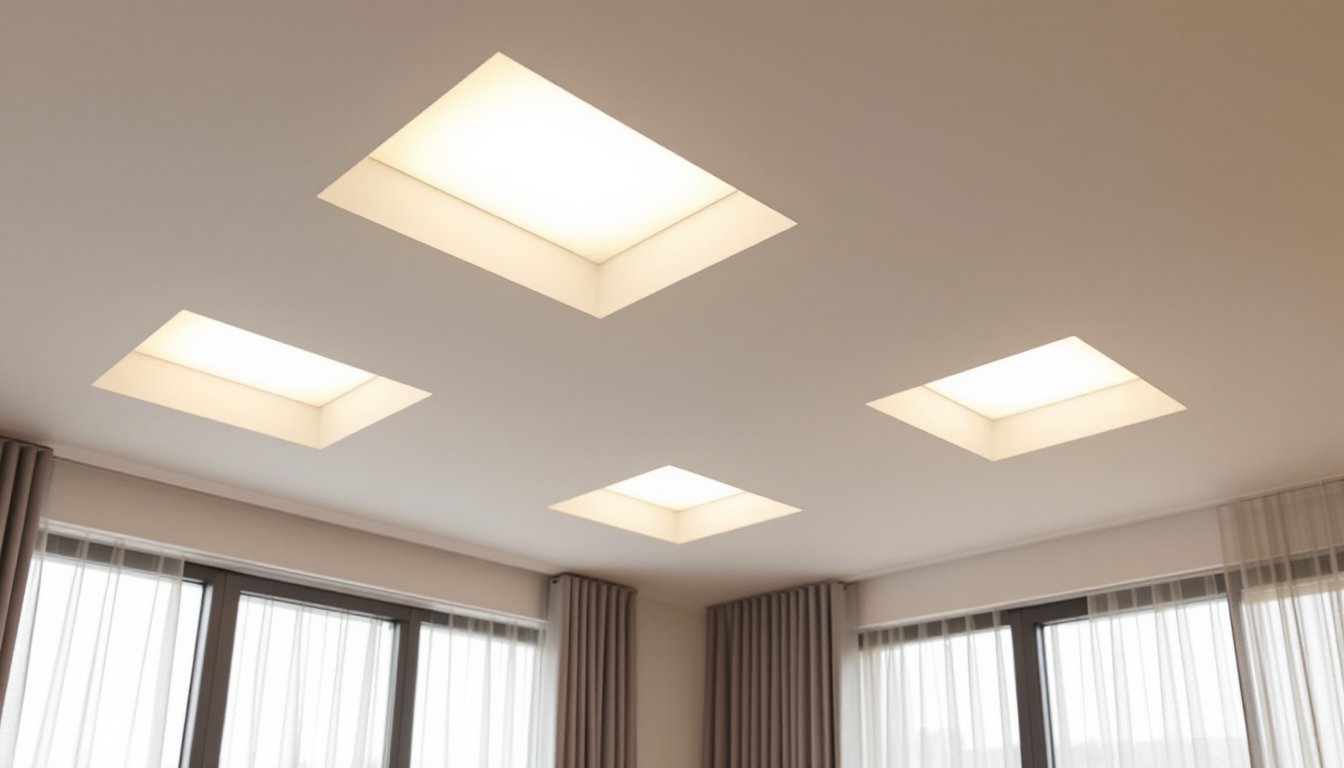
Square trimless recessed lighting delivers clean, contemporary illumination that disappears into the ceiling. Unlike traditional recessed cans with visible trim rings, these fixtures sit flush with drywall or plaster, creating an uninterrupted surface. The result? A minimalist aesthetic popular in modern homes, galleries, and commercial spaces. This guide covers what trimless fixtures are, how they differ from standard recessed lights, what features matter, where they work best, and how to install them, including the mistakes that trip up even experienced DIYers.
Table of Contents
ToggleKey Takeaways
- Square trimless recessed lighting creates a minimalist, uninterrupted ceiling aesthetic by sitting flush with drywall, eliminating the visible trim rings of traditional recessed lights.
- New-construction and remodel square trimless recessed lighting require proper support blocking, IC-rating for insulated ceilings, and fire-rated housings in multi-family or code-regulated spaces.
- Flawless drywall finishing is critical—trimless fixtures expose every imperfection, requiring at least three coats of joint compound sanded smooth to avoid visible ridges and cracks.
- Square trimless lights work best in modern spaces like open-plan living rooms, kitchens over islands, hallways, and contemporary galleries but should be avoided in textured or popcorn ceilings.
- LED drivers must match your dimmer type (TRIAC, ELV, or 0–10V) to prevent flickering or buzzing, and always verify beam angle (90–100° for general lighting) and CRI ratings (≥90 for task areas) before purchasing.
- Common installation mistakes—skipped blocking, poor finishing, mismatched dimmers, and vapor barrier damage—undermine the clean aesthetic; precision planning and layout using painter’s tape or laser levels prevents these costly errors.
What Is Square Trimless Recessed Lighting?
Square trimless recessed lighting refers to fixtures installed so the housing edges align perfectly with the ceiling plane. The fixture body sits above the ceiling line, while the drywall or plaster is cut and finished right to the edge of the aperture, no decorative trim ring or baffle to cover the gap.
Most trimless housings feature a mud-in flange: a perforated metal or plastic edge designed to accept joint compound (mud) directly. The installer tapes and finishes this flange as part of the drywall process, burying the fixture border under layers of compound and paint.
Square trimless lights differ from round versions in aperture shape and sometimes in housing design. Square housings often require blocking or framing between joists to support all four sides, since the shape doesn’t self-center like a round can. Nominal aperture sizes run from 2×2 inches up to 6×6 inches, with 3×3-inch and 4×4-inch being most common in residential settings.
These fixtures can be new-construction (install before drywall) or remodel (cut-in after ceiling is finished). New-construction housings mount directly to framing: remodel versions use spring clips or mounting plates anchored to existing drywall.
Why Choose Square Trimless Recessed Lights Over Traditional Options
Trimless fixtures eliminate visual clutter. Traditional recessed lights show a trim ring, often white, brushed nickel, or bronze, that creates a circular accent on the ceiling. Trimless designs vanish into the plane, emphasizing the light itself rather than the fixture.
This makes trimless ideal for architectural lighting, where the goal is uniform illumination without drawing attention to sources. Think high-end condos, galleries, or open-plan living spaces with vaulted or coffered ceilings. The square aperture works especially well in contemporary interiors with linear design elements, square tile, grid ceilings, or minimalist furniture.
Square shapes also allow tighter spacing in grids. Round trim rings leave gaps between fixtures: square apertures can pack more densely if the design calls for it. That said, tighter spacing demands careful planning to avoid hotspots or overlapping beam patterns.
Drawback: Trimless lights require flawless drywall finishing. Any unevenness, cracking, or paint buildup around the aperture stands out under direct light. This isn’t a retrofit project for textured ceilings or for DIYers uncomfortable with taping and mudding. If the ceiling finish isn’t smooth, stick with traditional trim that hides imperfections.
Key Features to Look for When Buying Square Trimless Recessed Lighting
Housing type: New-construction housings mount to joists with adjustable bars or flanges. Remodel housings rely on clips. If ceiling access is limited, verify the housing is rated for insulation contact (IC-rated) if you have insulation in the ceiling cavity. Non-IC housings require 3 inches of clearance from insulation.
Fire rating: In multi-family or commercial projects, look for housings with an ASTM E119 or UL fire rating. These include intumescent seals that expand under heat to maintain ceiling fire resistance. Always check local codes: some jurisdictions require fire-rated assemblies even in single-family homes.
Driver location: LED square trimless fixtures use an integrated driver (built into the housing) or a remote driver (separate box that mounts elsewhere in the ceiling). Remote drivers simplify maintenance, swap the driver without touching drywall, but require more ceiling depth and wire management. Integrated drivers are compact but mean replacing the whole housing if the driver fails.
Beam angle and color temperature: Most square trimless lights offer beam angles from 40° (narrow spot) to 120° (wide flood). For general ambient lighting, a 90–100° flood works well. Adjustable color temperature (2700K–5000K) or tunable white adds flexibility. Fixed CCT is fine if you’re consistent across the home.
Dimming compatibility: Verify the fixture is dimmable and check which dimmer types it supports, TRIAC (forward-phase), ELV (reverse-phase), or 0–10V. Many residential LED fixtures are TRIAC-compatible with standard Lutron or Leviton dimmers, but always match dimmer to driver specs to avoid flicker or buzzing.
CRI (Color Rendering Index): For kitchens, baths, or task areas, look for CRI ≥90. Cheaper fixtures may sit at CRI 80, which flattens colors. High-CRI lighting shows true reds, greens, and skin tones.
Best Rooms and Applications for Square Trimless Recessed Lighting
Square trimless fixtures shine in spaces where the ceiling itself is a design feature. Living rooms and great rooms benefit from the clean, unbroken plane, especially with tray ceilings or exposed beams. Space fixtures 4–6 feet apart in a grid pattern for even ambient light.
Kitchens suit square trimless over islands and peninsulas, particularly when paired with a linear layout. A row of 3×3-inch or 4×4-inch squares along the island centerline provides task lighting without the visual bulk of pendants. Avoid placing trimless directly over the sink or cooktop unless the housing is wet- or vapor-rated: steam and grease can infiltrate the aperture.
Hallways and corridors are natural fits. A single line of square trimless lights creates a modern gallery effect. Space them closer than in open rooms, 3–4 feet on center, to maintain consistent footcandles.
Bathrooms work if ventilation is adequate. Trimless fixtures above vanities need to be damp-rated (not just dry-rated) if installed near tubs or showers. Pair with a separate exhaust fan: trimless housings don’t integrate fans the way some traditional trims do.
Bedrooms can use square trimless for ambient lighting, but consider color temperature carefully. Warmer tones (2700K–3000K) feel more restful than cool whites (4000K+). Many homeowners combine trimless ambient fixtures with bedside sconces or table lamps for layered lighting.
Avoid trimless in textured or popcorn ceilings. The mud-in flange only works on smooth drywall or veneer plaster. If the ceiling has knockdown or orange-peel texture, either smooth a patch around each fixture (labor-intensive) or choose traditional trim that bridges the gap.
How to Install Square Trimless Recessed Lighting (DIY Overview)
Permits and codes: Electrical work typically requires a permit. Check local ordinances. In jurisdictions following the 2020 National Electrical Code (NEC), recessed fixtures must be installed per manufacturer instructions, and connections must occur in approved junction boxes or housings with integral boxes.
Tools and materials:
- Drill/driver with hole saw or oscillating multi-tool
- Drywall saw or utility knife
- Wire strippers, voltage tester
- Joint compound, drywall tape, trowel
- Safety glasses, dust mask, gloves
- Ladder or work platform
- Square trimless housings (IC-rated if applicable)
- 14/2 or 12/2 NM-B cable (match circuit wire gauge)
- Wire nuts or push-in connectors
Steps for new construction:
- Frame blocking. Square housings often need 2×4 or 2×6 blocking installed between joists to support all edges. Measure aperture dimensions and add housing clearance per manufacturer specs (usually 1–2 inches). Secure blocking perpendicular to joists with structural screws.
- Mount housing. Position the housing between blocking or joists. Use adjustable mounting bars or nail flanges. Ensure the mud-in flange sits level with the eventual drywall plane, most housings have depth marks or adjustable brackets.
- Run wiring. Route NM cable from the switch box to each housing. Secure cable within 12 inches of the housing and leave 6–8 inches of slack inside. Make connections per NEC 110.14 and 314.16 (box fill calculations). Most housings include an integral junction box: connect black to black (hot), white to white (neutral), and ground wires together. Install wire nuts and fold connections neatly into the box.
- Install drywall. Cut drywall to fit snugly around the housing’s mud-in flange. The flange should be exposed, flush with the drywall surface. Do not cover the aperture opening.
- Tape and finish. Apply mesh or paper drywall tape around the flange edge where it meets drywall. Spread joint compound over the tape in thin, feathered coats, three coats minimum. Sand smooth between coats. The goal is a seamless transition from drywall to flange with no visible lip. Prime and paint the ceiling, cutting carefully along the aperture edge.
- Install LED module or trim insert. Once paint is dry, snap or twist-lock the LED module into the housing. Some models use magnetic attachments: others clip in. Test for proper seating, gaps will cast shadows.
Steps for remodel/retrofit:
- Locate joists and obstructions. Use a stud finder to map ceiling framing. Mark the planned aperture location, ensuring clearance from joists, ductwork, and wiring.
- Cut opening. Trace the housing template (supplied with most fixtures) onto the ceiling. Cut with a drywall saw or oscillating tool. Keep the cut tight to template dimensions.
- Fish wiring. If adding a new circuit, run cable from the switch box to the opening. This may require attic access or cutting additional access holes. For a single fixture on a switched circuit, splice into an existing lighting circuit if capacity allows (check breaker rating).
- Install housing. Insert the remodel housing into the opening. Spring clips or turn-buckle straps will secure it against the drywall from above. Make electrical connections in the housing’s junction box.
- Finish edges. Apply joint compound around the mud-in flange, feathering outward. Sand, prime, and paint. Remodel installs often require careful blending to match the existing ceiling finish.
- Install module. Insert the LED module once finishing is complete.
When to call a pro: If the ceiling has no attic access, if wiring must pass through fire-rated assemblies, or if local codes mandate licensed electrician sign-off, hire help. Fine Homebuilding notes that adaptable housings simplify installation but still require code-compliant wiring practices.
Common Mistakes to Avoid with Trimless Recessed Lighting
Skipping blocking in new construction. Square housings need solid support on all four sides. Without blocking, the housing can sag or twist, throwing off the mud-in flange alignment. This leads to cracks around the aperture and uneven light distribution.
Poor drywall finishing. Trimless fixtures expose every imperfection. Rushing the taping and mudding process results in visible ridges, shadows, or cracks that worsen over time as the house settles. Plan for at least three coats of compound, sanded smooth. If you’re not confident with finishing, consider hiring a taper or choosing traditional trim.
Ignoring fire ratings. In ceilings that form a fire-rated assembly (common in multi-family buildings or garages below living spaces), using non-rated housings can void the assembly’s rating. This is both a code violation and a safety hazard. Verify that the plaster-in trimless lighting housings you select carry the required fire rating.
Incorrect dimmer pairing. LED drivers are sensitive to dimmer type. A mismatched dimmer causes flickering, buzzing, or limited dimming range (e.g., only dims to 60% instead of 1%). Always cross-reference the fixture’s dimmer compatibility list with your wall dimmer model.
Overlapping or uneven spacing. Trimless fixtures look best in symmetrical grids or linear runs. Random spacing or clustering creates visual chaos. Use painter’s tape or a laser level to lay out aperture locations before cutting. For general lighting, aim for fixtures spaced 1.5× the ceiling height apart, e.g., 12 feet apart in a room with 8-foot ceilings.
Installing in insulated ceilings without IC rating. Non-IC housings can overheat and fail prematurely if buried in insulation. Check the housing label. IC-rated fixtures cost slightly more but eliminate the need to clear insulation, which is time-consuming and reduces thermal efficiency.
Forgetting vapor barriers. In climates with significant temperature differentials, ceiling assemblies may include polyethylene vapor barriers. Puncturing the barrier with recessed housings creates condensation pathways. Use housings with integral vapor seals or consult Bob Vila for guidance on sealing penetrations in vapor-retarder assemblies.
Conclusion
Square trimless recessed lighting delivers a sleek, modern look, but only if installed with precision. From selecting IC-rated, fire-compliant housings to mastering the drywall finish around the aperture, success hinges on preparation and patience. When done right, trimless fixtures disappear into the ceiling, letting the light take center stage. For other versatile lighting options that complement trimless designs, explore solutions like track light heads that offer adjustable illumination in contemporary spaces.